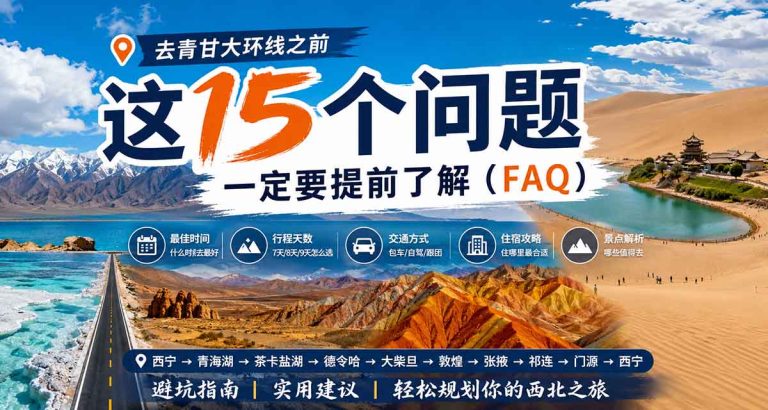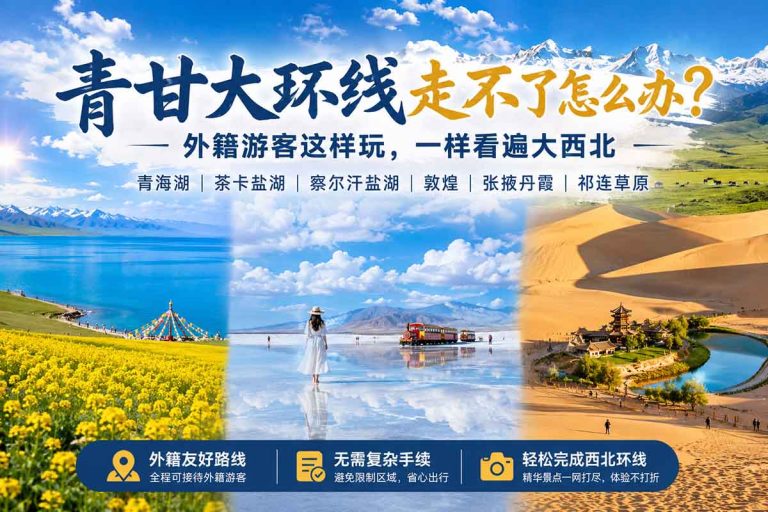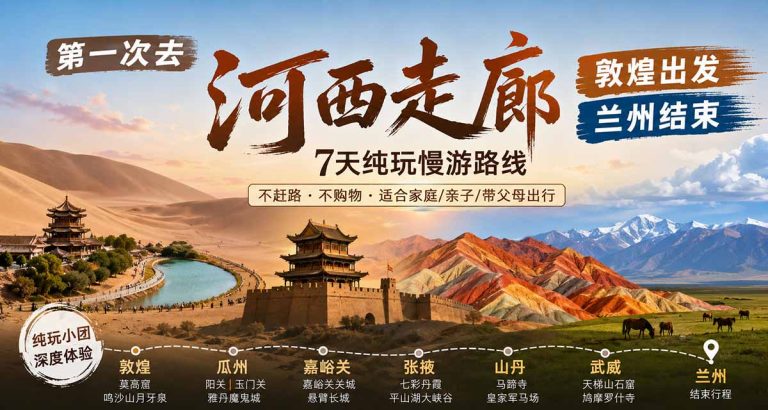

Before preparing to go to Qinghai-Gansu Grand Loop (also known as Gansu-Qinghai Grand Loop or Northwest Grand Loop), I browsed strategies on various platforms for half a month.
Almost all the highly praised copy online is like this:
“You must visit the Great Northwest at least once in your life.”
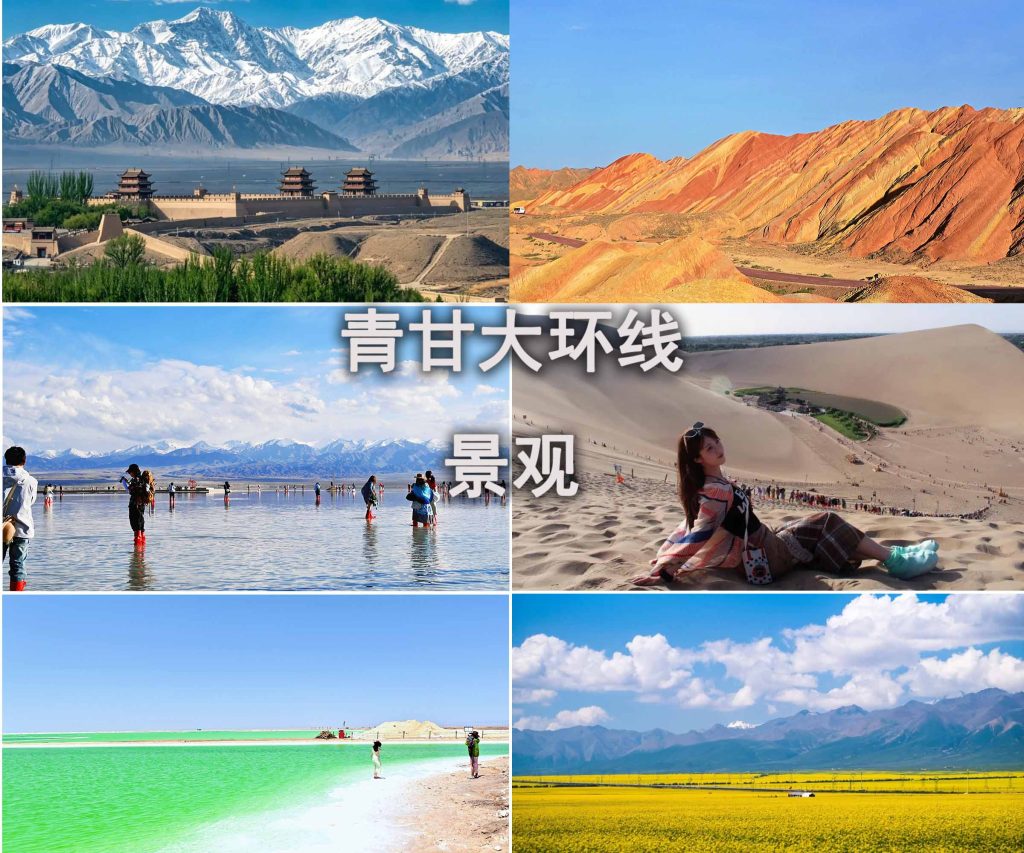
“In 7 days, experience lakes, snow mountains, salt lakes, deserts, frontier fortresses and the Great Wall, flower seas, Yardang landforms, and grasslands.”
“Summer vacation is the peak beauty season for the Qinghai-Gansu route.”
These statements are all correct, and the scenery of the Northwest indeed lives up to the praise. But after completing the trip and lying in bed, my biggest feeling is: The scenery is truly worth it, but 90% of bloggers seriously underestimate or even conceal the actual hardcore difficulty of this route.
This is definitely not a traditional easy leisure trip. High-altitude environments, daily drives of 500-600 kilometers, extreme day-night temperature swings, intense UV rays, plus unexpected situations in scenic areas— if any one link isn’t prepared for, the travel experience will plummet.
This article doesn’t offer superficial recaps; it only shares 10 hardcore lessons I learned from my first Qinghai-Gansu trip through real pitfalls. If you’re planning your 2026 itinerary, I recommend reading it carefully—it can save you a lot of trouble.
1. Weather and Gear: The real challenge isn’t the cold, but how fast it changes
1. Don’t be fooled by “summer vacation”—you can truly experience two seasons in one day
Many people ask before departure: “Is it hot in Qinghai-Gansu in July or August? Do I need to bring a down jacket?”
The answer is: In the same day, you might need both short sleeves and a windproof jacket.
The core pain point of the Qinghai-Gansu Grand Loop isn’t “absolute low temperature,” but “extremely rapid temperature shifts.”
The Qinghai section (Xining, Qinghai Lake, Qilian) has an overall altitude above 3000 meters. Morning and evening temperatures are noticeably low, often single digits, with a piercing chill. Once entering the Gansu section (Da Qaidam, Dunhuang, Zhangye), the blazing sun during the day can instantly heat the desert and Gobi to over 30°C. Many girls who only brought summer clothes and thin sun protection jackets caught colds on the spot from the wind while watching the sunrise at Qinghai Lake.
💡 Blogger’s real-world clothing advice (onion layering method):
- Base layer: Pure cotton short sleeves or quick-dry clothing (for high-temperature days in Dunhuang and Zhangye).
- Sun protection layer: Skin shirt or thin long sleeves (the Northwest sun hits the skin directly; physical protection works best).
- Warmth layer: Fleece jacket, thick hoodie, or lightweight down jacket (essential for sunrise at Qinghai Lake or crossing mountain passes at Da Qaidam).
- Outer layer: Strongly recommend a windproof jacket with good wind resistance. The wind in the Northwest is extremely strong, so windproofing is the key to staying warm.
2. Sunglasses aren’t just for photos—they’re “medical-grade” eye protection
Many people only prepare sunscreen and overlook the importance of sunglasses. In the Great Northwest, sunglasses are a must-have for everyone—it’s even advisable to carry a spare pair in your bag.
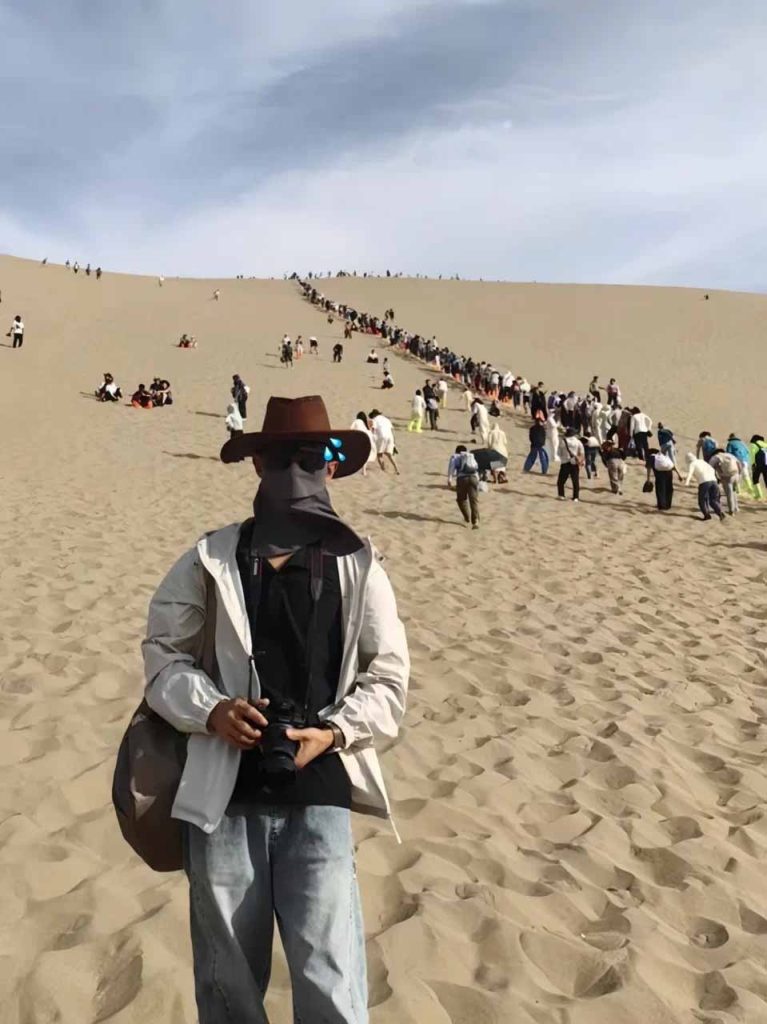
At Chaka Salt Lake or Qarhan Salt Lake, the vast white salt crystals are extremely glaring under the blazing sun. Without sunglasses for more than half an hour, your eyes can become dry, tear up, or even cause temporary “snow blindness.”

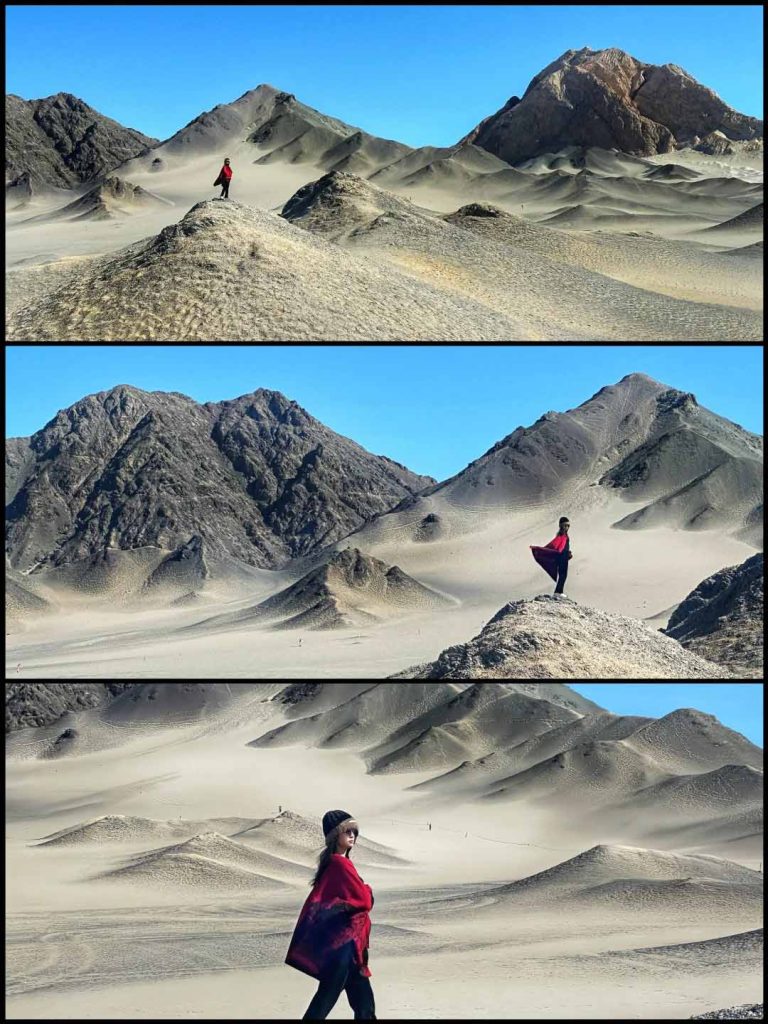
More importantly, at places like Mingsha Mountain and Black独山, sunglasses are the last line of defense against wind-blown sand entering your eyes. The wind in the Northwest comes without warning—if you’re not wearing sunglasses, your eyes could be scratched by sand-filled gusts in an instant, seriously affecting driving and travel safety.
2. Scenic Spot Pitfalls: Hidden landmines only known to those who’ve been there
3. The water Yardang is stunning, but never underestimate the “special forces mosquitoes” here in summer
Many people only remember the stunning water-desert landscape of Wusute Water Yardang, but don’t know about the extremely terrifying mosquito problem hidden here.
Because the desert rarely has large water areas, and summer temperatures are high, Wusute Water Yardang breeds large numbers of highly aggressive mosquitoes. These mosquitoes aren’t afraid of humans, are highly toxic, and can bite right through ordinary thin sun protection clothing.
- Pitfall avoidance tip: On the day you visit Wusute Water Yardang, no matter how hot it is, wear long sleeves and sturdy long pants. Before departure, spray mosquito repellent and cooling oil on your body like perfume. If you plan to camp or stay nearby, don’t keep car windows or room doors open for even a second.
4. Mingsha Mountain and Black独山: When the wind and sand pick up, you could end up covered in sand
- Mingsha Mountain (Dunhuang): Watching the sunset and riding camels is romantic, but once the wind starts, it becomes a natural sandstorm experience zone. Be sure to buy fully enclosed shoe covers beforehand, otherwise you could pour half a jin of sand out of your shoes.
- Black独山 (Lenghu): This is an extremely niche, moon-surface-like desolate and lonely black Yardang. There is almost no shelter, and wind speeds are usually level 5-6 or higher year-round.
- Sand protection hardcore gear: For these two places, besides wearing sunglasses to protect your eyes, strongly recommend preparing a dust mask or magic headscarf to cover your mouth and nose—otherwise, opening your mouth to speak means a mouthful of sand. Also, protect your phone and camera. Tiny dust particles blown into lens gaps can basically ruin the lens—prepare sealed bags.
5. Don’t treat all salt lakes the same: Chaka is truly weather-dependent
Many people come for the “mirror of the sky,” only to see a gray puddle and feel scammed. In fact, each salt lake on the Qinghai-Gansu route has its own characteristics—don’t use the same expectations for all:
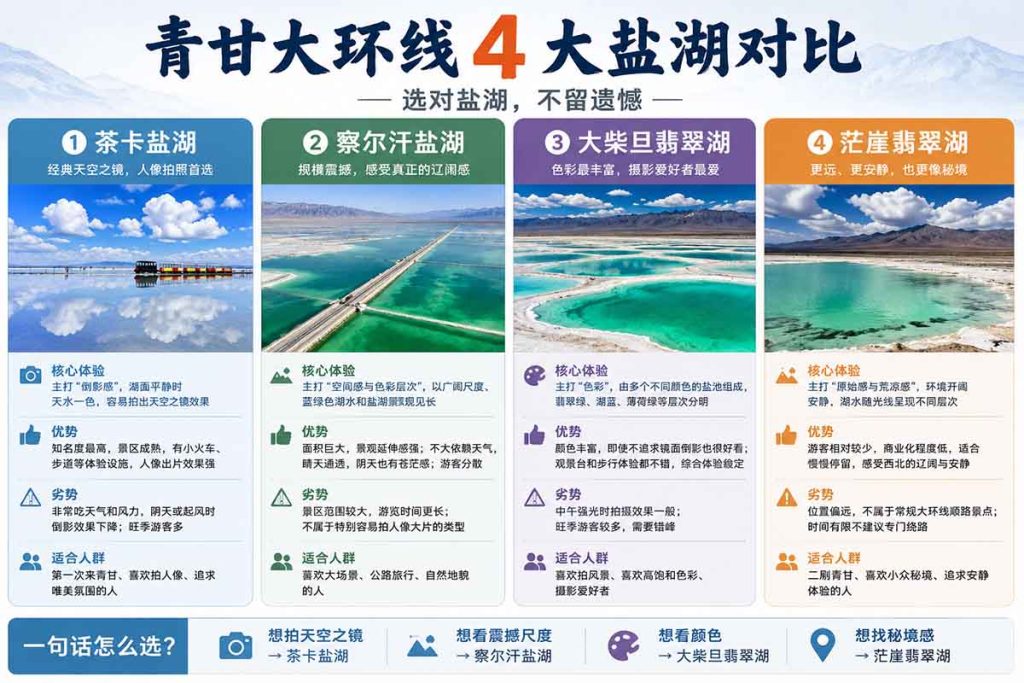
- Chaka Salt Lake: It’s a typical “weather decider.” It requires sunny and windless conditions with a mirror-like lake surface to capture beautiful reflections; on cloudy or windy days, the experience drops off a cliff.
- Qarhan Salt Lake: Huge in area, strongly industrial in feel—it’s about vastness and shock.
- Da Qaidam Emerald Lake: It’s about color layers. Strongly recommend going in the evening—when the sunset glow reflects on the Tiffany-blue lake water, it’s breathtaking.
- Mangya Emerald Lake: Even more remote—it’s about a unique atmosphere of solitude and desolation.
6. The U-shaped highway looks great in photos, but it’s also dangerous, inconvenient for parking, has many trucks, and requires safety awareness.

3. Plateau and Body: What really tires you out is usually not altitude sickness
6. Altitude sickness isn’t scary—fatigue from rushing is more common
Most tourists on the Grand Loop rarely experience severe malignant altitude sickness in Xining (2200m) and Qinghai Lake (3200m). What they more commonly encounter are fatigue signals from the body: easier shortness of breath, faster heart rate, poorer deep sleep, and slight temple throbbing.
This discomfort gets infinitely amplified by the body under the combined strain of “catching flights/trains + staying up late + sun exposure + long car rides.” Getting enough sleep in advance and keeping a calm mindset is far more important than taking various “altitude sickness miracle drugs.”
7. The first night after arrival directly determines your travel state for the first half of the trip
Many people, upon arriving in Xining, can’t wait to go out and check in, eat grilled lamb at night, and party. The result is a headache starting the next day, and the entire Qinghai Lake itinerary spent sleeping in the car.
- Iron rule for the first day: Check into the hotel early to rest. Drink plenty of warm water, keep meals light, and strictly avoid alcohol. For the first 48 hours, avoid high-temperature showers (to prevent blood vessel dilation leading to brain hypoxia), and don’t schedule intense hiking or photography. Bring a few ibuprofen tablets for emergency relief if headaches occur early on.
4. Route Planning: Don’t turn your trip into a “forced march triathlon”
8. Don’t turn a 7-day itinerary into an “Ironman”
First-time visitors to Qinghai-Gansu most easily make the mistake of “wanting too much”—trying to visit every viral highway and check-in spot they’ve heard of along the way.
The result is: waking up at 6 AM, 6-8 hours in the car, getting out to queue for photos, then back in the car to sleep, arriving at the hotel at 10 PM. By the third day, aesthetic fatigue sets in and you’re completely numb.
✍️ Blogger’s honest words:
What truly stays with you for a long time has never been how many iconic stone tablets you checked off, but those moments when you slow down. Like listening to the biting wind by Qinghai Lake at dawn, walking barefoot on the gradually cooling sand at Mingsha Mountain at dusk watching the sunset, or looking up at the starry sky in Da Qaidam at night.
9. Tickets and transportation must be booked in advance
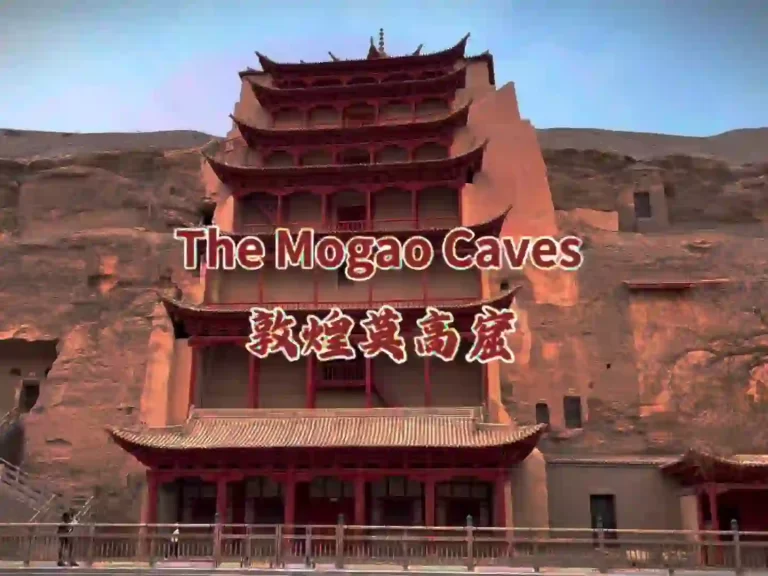
Mogao Caves tickets (the hardest to get on the Grand Loop): Must book Class A tickets on the official website 30 days in advance! Many think “I can just buy emergency tickets later,” but that’s a big mistake. Class A tickets include 2 stunning digital films and 8 classic caves with a professional guide throughout; emergency Class B tickets only allow viewing 4 caves, with 2-hour queues in peak season and only 20 minutes inside. Without a Class A ticket, the Dunhuang experience is at least halved.
Advance planning for major transportation and private drivers/self-driving: Summer is peak season for Qinghai-Gansu. Not only Mogao Caves, but accommodations in core areas like Xining, Dunhuang, and Da Qaidam, as well as reliable private drivers/rental car conditions, should be locked in at least half a month in advance. Once the Northwest enters peak season, prices change daily, and last-minute blind-box style searches for cars and rooms easily lead to “black car” or “low-quality homestay” pitfalls.
10. Before departure, assess whether you’re suited for Qinghai-Gansu
Before paying long-distance tolls and fuel costs, do a self-assessment in your mind.
- This is very suitable for: First-time visitors to the Northwest, those who deeply love natural scenery, road trip enthusiasts, and photography fanatics.
- This may not be suitable for: People who can’t live without modern urban conveniences, those who hate long car rides, or those who just want to lie in a hotel for pure leisure and relaxation.
✍️ Final words
If you ask me, after experiencing eating sand, mosquito bites, cold wind, and long-haul driving, would I go to the Great Northwest again?
My answer is still: Yes.
But I definitely wouldn’t use the same frantic rushing style as the first time. I would skip a few so-called viral highways, check off fewer repetitive spots, and leave more time to space out on the road.
Because the most charming part of Qinghai-Gansu has never been the group photos you take in front of scenic area gates, but those moments when the wheels speed along deserted highways and the scenery outside the window instantly switches from lush green grass to barren desolation—that sudden feeling of being healed by nature.
Bring your windproof jacket, mosquito repellent, and sunglasses. The Northwest is vast and truly worth experiencing properly.
Want a customized Gannan itinerary? Message us now or contact us directly to chat with our travel planner. Tell us your time and ideas, and leave the rest to us!

Scan to add WeChat