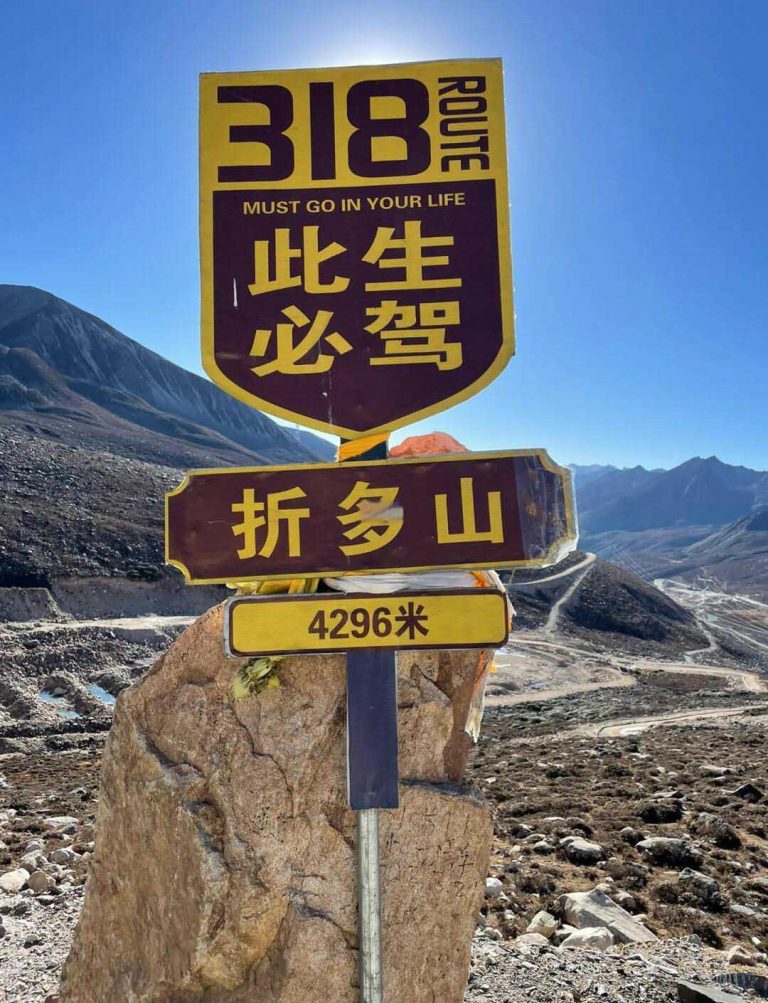

No cumbersome procedures, no long detours, yet you can see grasslands, snow-capped mountains, monasteries, and the purest Tibetan scenery.
In recent years, if selecting China’s most popular Northwest travel routes, the Qinghai-Gansu Grand Loop would definitely rank among the top.
From Qinghai Lake to Chaka Salt Lake, from Emerald Lake to Dunhuang Mogao Caves, from Qilian Grasslands to Zhangye Danxia, this grand loop spanning Qinghai and Gansu has almost monopolized people’s imagination of the “Great Northwest.”
Every summer, large numbers of visitors from Hong Kong, Macau, Taiwan, and overseas Chinese come to experience this classic route.
However, many people ask when planning:
“Is it true that foreign passports cannot complete the full Qinghai-Gansu Grand Loop?”
The answer is:
The situation is more complicated than imagined.
First, a note: Hong Kong, Macau, and Taiwan visitors are usually unaffected and can complete the entire Qinghai-Gansu Grand Loop
There is much online discussion about certain areas in Qinghai, which can easily cause misunderstandings.
In fact, if you hold:
- Mainland Travel Permit for Hong Kong and Macau Residents (Home Return Permit)
- Mainland Travel Permit for Taiwan Residents (Taiwan Compatriot Permit)
Under normal circumstances, the classic Qinghai-Gansu Grand Loop can be arranged without issues.
Therefore:
Hong Kong, Macau, and Taiwan visitors generally have no need to worry.
This article mainly discusses:
Overseas Chinese visitors holding foreign passports.
For example:
- Singapore passport
- Malaysia passport
- US passport
- Canada passport
- Australia passport
- UK passport
and other foreign passport holders.
1: Why is it difficult for foreign visitors to fully experience the Qinghai-Gansu Grand Loop?

Many people think the most classic part of the Qinghai-Gansu Grand Loop is Qinghai Lake.
In fact, what truly draws countless visitors to the Northwest is the Haixi section.
The standard Qinghai-Gansu Grand Loop generally goes:
Xining → Qinghai Lake → Chaka Salt Lake → Delingha → Dachaidan → Dunhuang → Jiayuguan → Zhangye → Qilian → Xining
The most photogenic, stunning, and “Great Northwest” style landscapes are mostly concentrated in Haixi Mongolian and Tibetan Autonomous Prefecture.
For visitors holding foreign passports, this is precisely the area most likely to affect itinerary planning.
The Haixi section is the true essence of the Qinghai-Gansu Grand Loop
Many viral photos actually come from Haixi Prefecture.
Including:
- Emerald Lake
- Dachaidan Salt Lake
- Mars Highway
- Nanbaxian Yardang
- U-shaped Highway
- East Taijinar Lake
- Water Yardang
- Aiken Spring
- Mangya Emerald Lake
- Eboliang Yardang
These places together form the impression of:
“The Great Northwest like a lonely planet”.
However, for foreign visitors, Haixi Prefecture is often the most difficult part to arrange on the Qinghai-Gansu route.
Some areas cannot be freely planned for accommodation and stays like domestic visitors.
Although some roads can be passed normally, the actual travel experience is often affected.
Many travel agencies, to avoid itinerary risks, also suggest foreign visitors bypass the Haixi section.
The result is:
Completing the Qinghai-Gansu Grand Loop but missing the most classic parts.
Qilian Grasslands may also leave regrets
Besides Haixi Prefecture.
The Qilian Mountains scenic belt at the end of the Qinghai-Gansu Grand Loop is also a highlight moment for many visitors.
Qilian in summer:
Snow mountains stretching continuously.
Vast grasslands.
Herds of cattle and sheep.
Rapeseed flower seas covering the valleys.
Many visitors even believe:
Qilian Grasslands are one of the most beautiful parts of the entire Qinghai-Gansu Grand Loop.
But for visitors holding foreign passports, itinerary arrangements toward Qilian are often less convenient than for domestic visitors.
Therefore, many groups ultimately can only choose to detour back to Xining.
Not only increasing driving distance but also missing classic scenery.
2: Rather than taking an “incomplete” Qinghai-Gansu route, choose the more suitable Gannan

If what you yearn for is:
✔ Grasslands
✔ Snow mountains
✔ Tibetan culture
✔ Prayer flags and monasteries
✔ Alpine lakes
✔ Photography scenery
Then Gannan may be more suitable for you than the Qinghai-Gansu Grand Loop.
And many who have visited Gannan discover:
It is far more stunning than imagined.
3: Gannan: A severely underrated Tibetan secret realm
Gannan is located in southern Gansu.
It is a fairyland on earth, known as “Little Tibet” and the “Back Garden of Gansu.”
Situated on the northeastern edge of the Qinghai-Tibet Plateau.
Here there are rich natural landscapes; entering Gannan, snow mountains, canyons, forests, and glaciers—every place is a masterpiece of nature
It also possesses a complete Tibetan cultural system, yet is not as remote as Tibet. It further demonstrates unparalleled advantages in travel experience: it lacks Tibet’s frequent altitudes above 4,000 meters, vegetation is lush, and the probability of altitude sickness is greatly reduced.
For overseas visitors experiencing Tibetan culture for the first time.
Gannan is often the easiest entry point into the Tibetan world.
The entire journey feels around 20°C, and you still need a thin blanket at night—summer happiness is maxed out!
No endless roads to rush, no crowds, only endless unforgettable scenery.
In the morning, visit Milarepa Buddhist Pavilion; the reddish-brown pavilion emerges from the morning mist,
The gilded pagoda top shines, the gentle sound of turning prayer wheels mixed with the tinkling of wind-horse flags instantly calms the mind
In the afternoon, venture into Dieshan meadows; wildflowers form a colorful carpet, and the snow peak of Cuomei Peak sways in the distance
Sit on the grass and feel the breeze, watch eagles soar across the blue sky—every breath is cool and refreshing
In the evening, go to Zhagana to wait for a sunset; the stone city is dyed golden by the glow, smoke rises from Tibetan villages, and cattle and sheep slowly head home
This is what summer should be like—no need for complex planning, just follow your feelings; every day is filled with relaxing vacation vibes, and Gannan fully delivers the joy of escaping the city✨
Labrang Monastery: One of the world’s great Tibetan Buddhist institutions
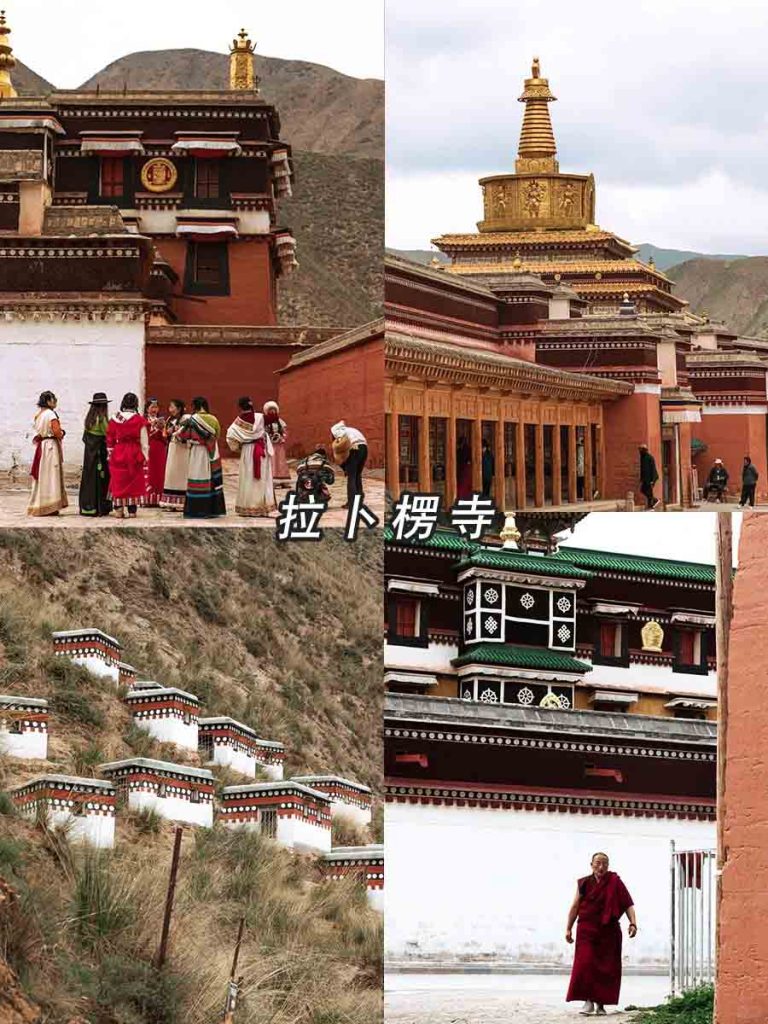
This is one of the six great monasteries of the Gelug school of Tibetan Buddhism.
Long corridors for circumambulation surround the monastery.
Every day, devotees slowly circumambulate.
The sound of chanting scriptures in the early morning echoes among the mountains.
Even those who have never been exposed to Tibetan Buddhism will be captivated by the atmosphere here.
Sangke Grassland: The Ideal Grassland in Many People’s Hearts
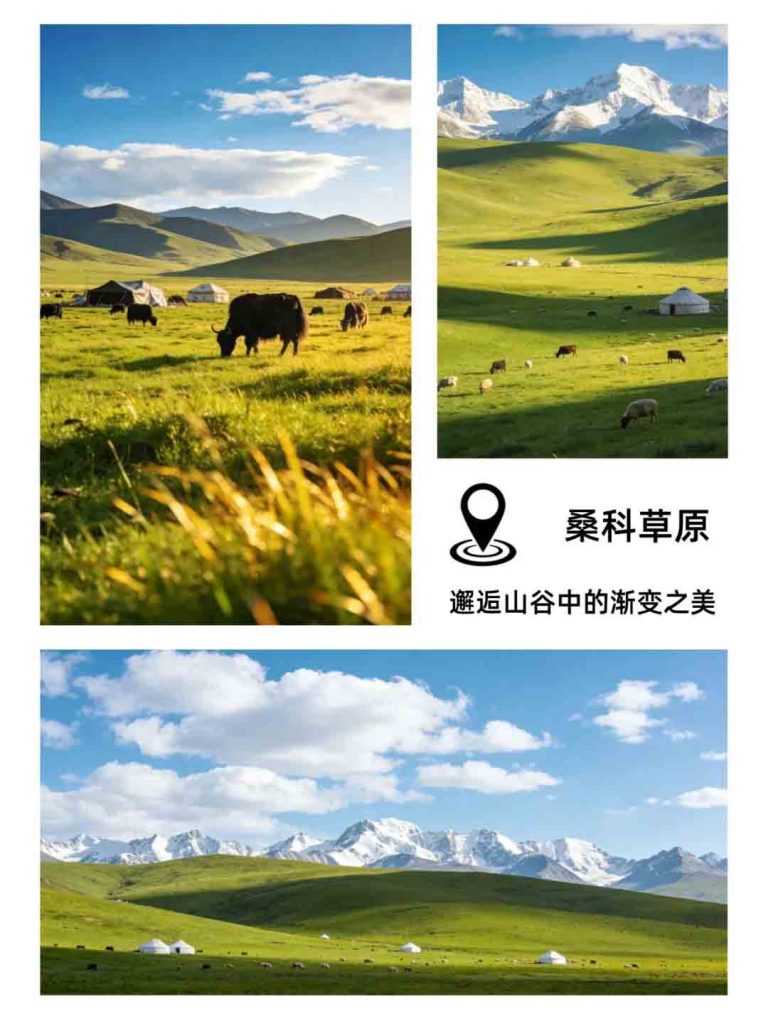
The summer Sangke Grassland is endlessly green.
Snow-capped mountains appear and disappear in the distance.
Herds of cattle and sheep are scattered throughout.
No fences.
No noise from commercialized scenic areas.
Only the purest grassland scenery.
Zhagana: The Real-Life Shangri-La
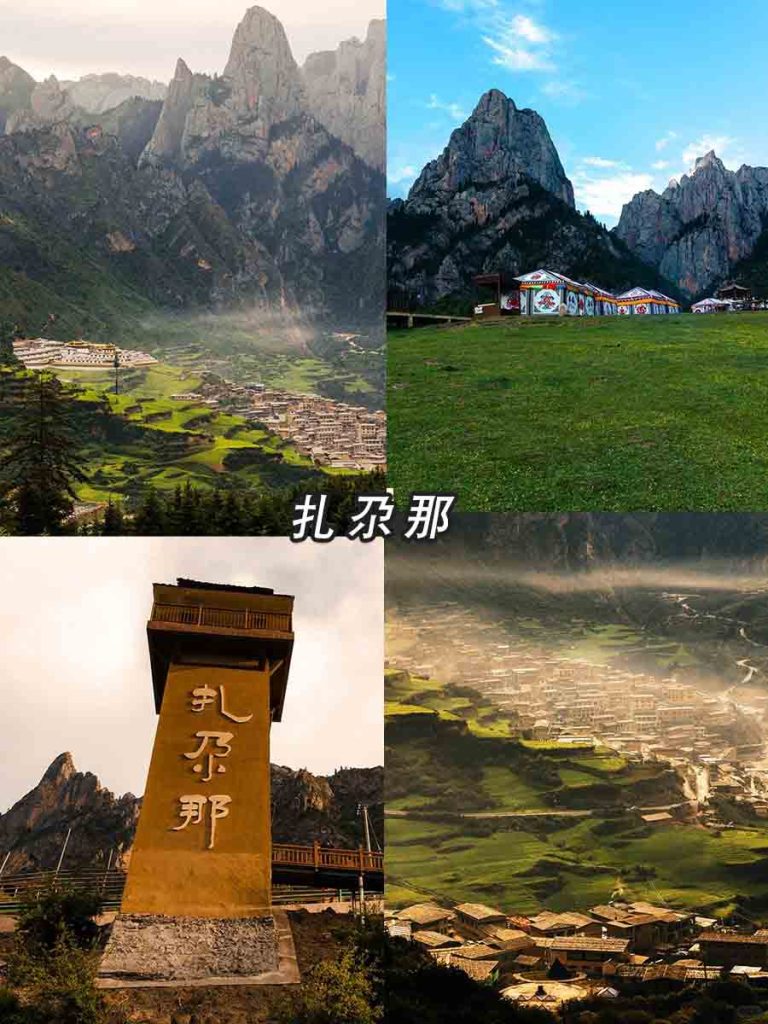
If you can only visit one place in Gannan.
Many people would choose Zhagana.
It has been praised by China National Geographic as:
“A secret realm left by God on earth.”
Surrounded by rocky mountains.
Covered by forests.
Tibetan villages scattered in the valleys.
When morning clouds rise.
It feels like stepping into a fairy tale world.
Many tourists even believe:
The impact of Zhagana is no less than that of Hemu in Xinjiang.
Langmusi: One Town, Two Styles
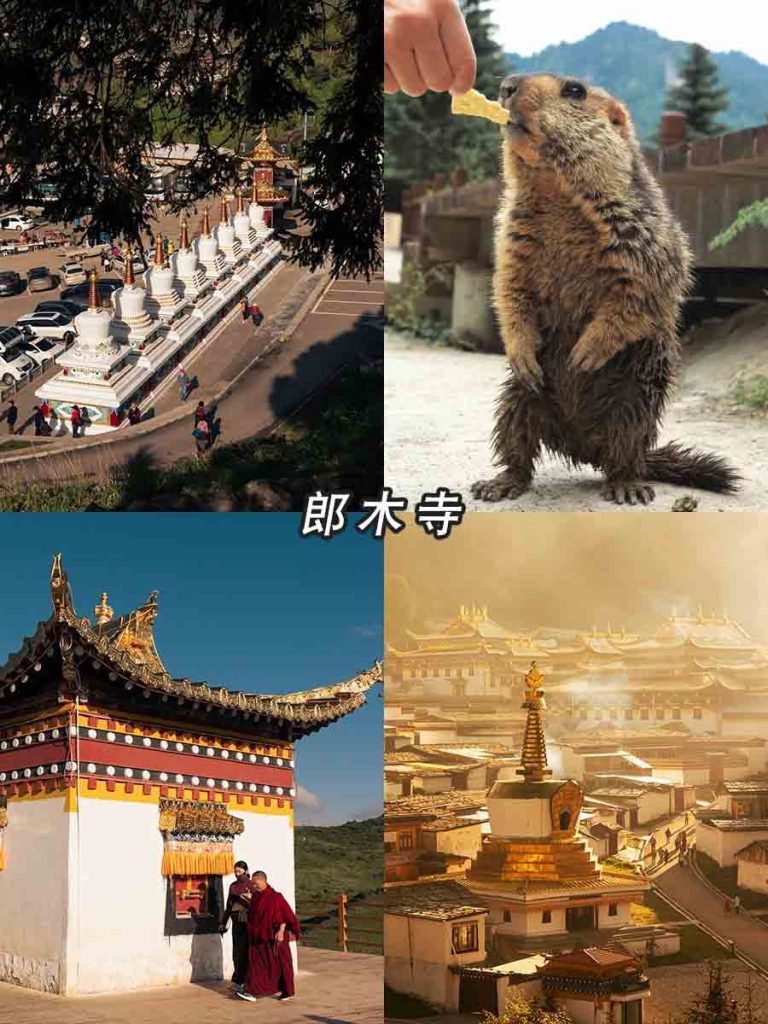
Langmusi spans Gansu and Sichuan.
It features both Tibetan Buddhist culture.
And highland pasture scenery.
Strolling along the Bailong River Gorge.
Temples and white stupas in the distance set against snow mountains.
It is one of the most culturally rich places in Gannan.
Ruoergai and the First Bend of the Yellow River
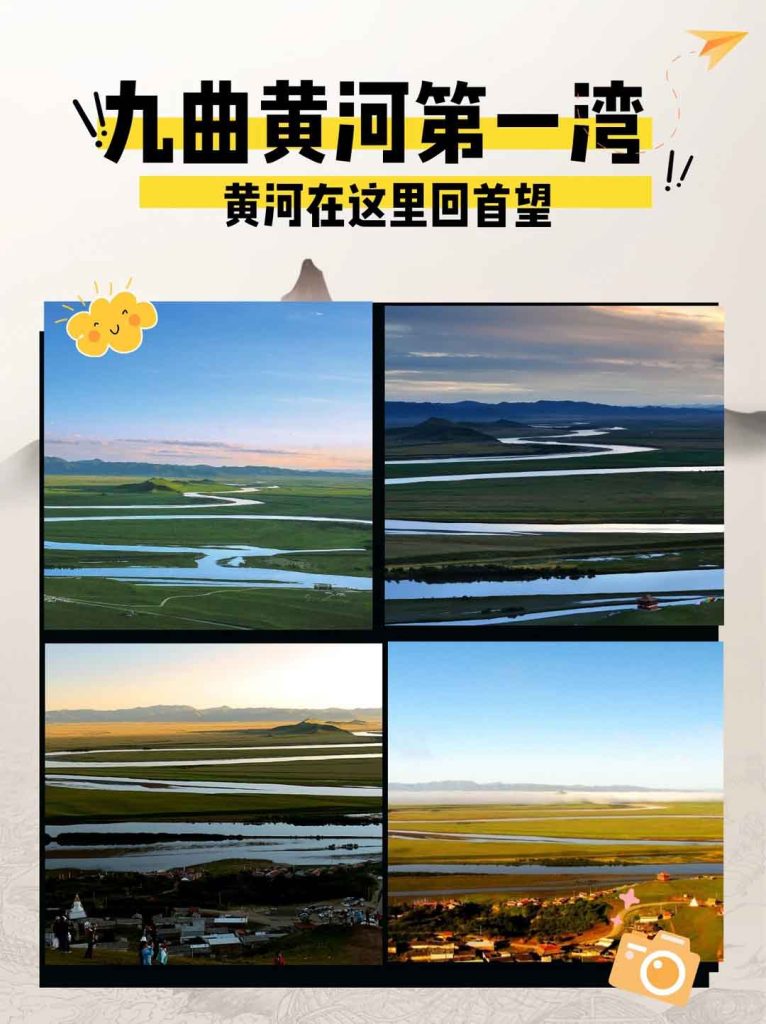
After leaving Langmusi.
The vast Ruoergai Grassland comes into view.
It has one of China’s largest highland wetlands.
The First Bend of the Yellow River is the most anticipated sunset of the entire Gannan journey.
Under the setting sun.
The Yellow River slowly carves a huge arc.
Golden light spreads across the river surface.
Many people who come here will exclaim:
The Yellow River can be so magnificent.
Four: Why Gannan Is More Suitable for Foreign Tourists Than Qinghai-Gansu?

Compared to the traditional Qinghai-Gansu loop.
Gannan has several obvious advantages.
For many overseas Chinese and foreign tourists, Gannan may be one of the easiest and most hassle-free choices for exploring Northwest China.
One: Simpler Procedures, More Worry-Free Travel
Compared to parts of the Qinghai-Gansu loop that may involve restrictions on foreign tourists staying overnight, route declarations, or temporary policy changes, most areas in Gannan are more friendly to foreign tourists.
Simply put, you don’t need to spend too much time researching which places you can visit or which hotels you can stay at, nor worry about last-minute changes to your itinerary. The entire journey is easier to plan, and the travel experience is more stable.
Two: No Need to Spend Every Day in a Car, Travel Is Truly a Vacation
Many people’s impression of Northwest travel is: the scenery is beautiful, but you’re on the road every day.
Gannan is different. The distances between attractions here are relatively reasonable, with no need for long drives through desolate uninhabited areas or hours spent continuously in a car.
Walk a bit, see a bit, enjoy a bit each day, with enough time to stop for photos, have coffee, and admire the grasslands and snow mountains, instead of being constantly on the road.
Three: High Scenic Density, Surprises Every Day
Gannan’s biggest feature is its highly concentrated landscapes.
Grasslands, snow mountains, wetlands, canyons, temples, and Tibetan villages are often along the same route. Today you can ride horses on the vast grassland, tomorrow listen to chanting in an ancient temple, and after crossing a mountain pass, see spectacular snow mountains.
Without spending a lot of time traveling, you can still enjoy a rich and diverse scenic experience.
Four: Not Just Viewing Scenery, But Experiencing Real Tibetan Life
If many popular routes are about “checking off scenery,” then Gannan is more about “experiencing life.”
It preserves a strong and complete Amdo Tibetan culture. You will see elderly people turning prayer wheels, herders on the grassland, monks in temples, and villages still maintaining traditional lifestyles.
This atmosphere where people, land, faith, and life intertwine is often more memorable than natural scenery alone.
Five: Suitable for Slow Travel, Not Rushing Through
Perhaps the most attractive aspect of Gannan is not any single popular spot, but the rhythm of the entire journey.
No need to rush between attractions, change locations every day, or spend all your time in a car. You can slowly appreciate the grasslands, snow mountains, and temples, truly relaxing during your trip.
For overseas tourists with limited time who still want a deep experience of Northwest scenery and Tibetan culture, Gannan is often more relaxed and worth savoring than the Qinghai-Gansu loop.
Five: Recommended Classic 8-Day Gannan Itinerary
D1 Lanzhou Assembly
D2 Lanzhou – Xiahe – Labrang Monastery
D3 Xiahe – Sangke Grassland – Langmusi
D4 Langmusi – Zhagana
D5 In-Depth Exploration of Zhagana
D6 Zhagana – Ruoergai Grassland
D7 The First Bend of the Yellow River
D8 Return to Lanzhou
The pace is comfortable throughout.
You can experience Tibetan culture.
And enjoy grassland and snow mountain scenery.
Especially suitable for family trips, friends traveling together, and overseas Chinese exploring Northwest China for the first time.
Finally
The Qinghai-Gansu loop remains one of China’s most classic Northwest travel routes.
For tourists from Hong Kong, Macao, and Taiwan, it is usually possible to experience the full route normally.
But for overseas Chinese holding foreign passports, special management regulations in some areas may make it impossible to fully complete the classic Qinghai-Gansu loop.
If your goal is to feel the vastness of the Northwest, Tibetan culture, and the magnificent scenery of snow mountains and grasslands.
Then Gannan may not be a “substitute.”
It is itself a sufficiently wonderful Northwest classic route that many people will never forget.
Sometimes, the best travel is not taking the most popular route.
But finding the one that suits you best.

Scan to add WeChat