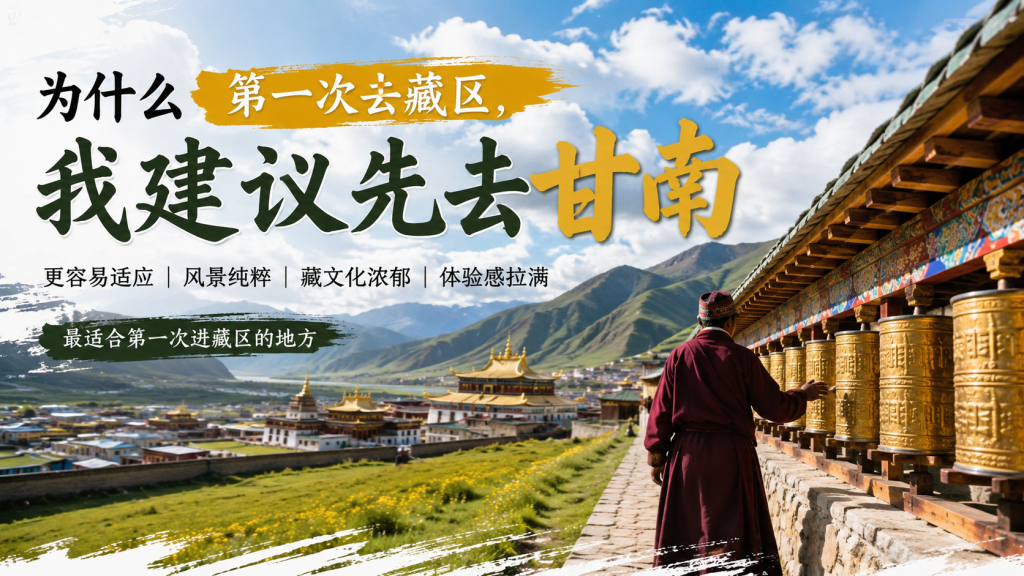
Many people yearn for the Tibetan region for the first time, and the images in their minds are often Tibet.
Snow mountains, prayer flags, temples, grasslands, yaks, and azure skies—only Tibet seems to represent the true Tibetan lands.
But if you ask me: For the first time entering the Tibetan region, where should you start?
My answer is not Tibet, but—Gannan.
There is no pressure from altitude sickness, no long journeys of over ten hours, and no complicated transportation or adaptation costs,
Nor are there cumbersome permit requirements (foreign tourists to Tibet must obtain a Tibet Travel Permit, and many border areas require advance application for border passes, while Gannan has no such restrictions)
Yet it fully encapsulates all your romantic imaginings of the Tibetan lands: vast grasslands, ancient temples with incense, pure and devout faith, vibrant pastoral life, winding rivers, morning mist in the mountains, and an unrestrained sense of freedom.
For first-time experiences of Tibetan culture and stepping onto the plateau, the gentle and gradual Gannan is far more suitable as the starting point for a Tibetan journey than Tibet.
What exactly is Gannan?
Gannan, officially Gannan Tibetan Autonomous Prefecture in Gansu Province, is connected by mountains and rivers to Aba in western Sichuan, both belonging to the eastern edge of the Qinghai-Tibet Plateau Tibetan cultural corridor
Many people hearing this name for the first time might mistakenly think it is just an ordinary mountainous area in Gansu.
But it is not.
Located on the northeastern edge of the Qinghai-Tibet Plateau, it is an important part of Tibetan culture, called by many travelers:
“The most accessible Tibetan land.”
It has the scenery of the Tibetan region and retains the Tibetan way of life, yet unlike Tibet, it has no obvious barriers.
The average altitude here is about 2500–3500 meters, milder compared to many areas in Tibet.
Here you can see vast grasslands and enter authentic, still-operating Tibetan Buddhist monasteries.
It has the plateau character without oppressing first-time visitors to the highlands.
Tip: The mainstream Gannan tourism loop on the market is not limited to Gansu; it conventionally links with northwestern and western Sichuan areas (popular spots like Langmusi, Ruoergai, and the First Bend of the Yellow River at Tangke all belong to the Aba region in western Sichuan).
First, Gannan offers a complete Tibetan experience but is easier to access
Many people have misconceptions about the Tibetan region.
They think you must cross snow mountains, traverse uninhabited areas, and use oxygen to truly have visited the Tibetan lands.
In reality, what truly makes people remember the Tibetan region has never been the altitude.
It is the atmosphere.
Gannan possesses many elements that most easily create awe upon first entering the Tibetan region:
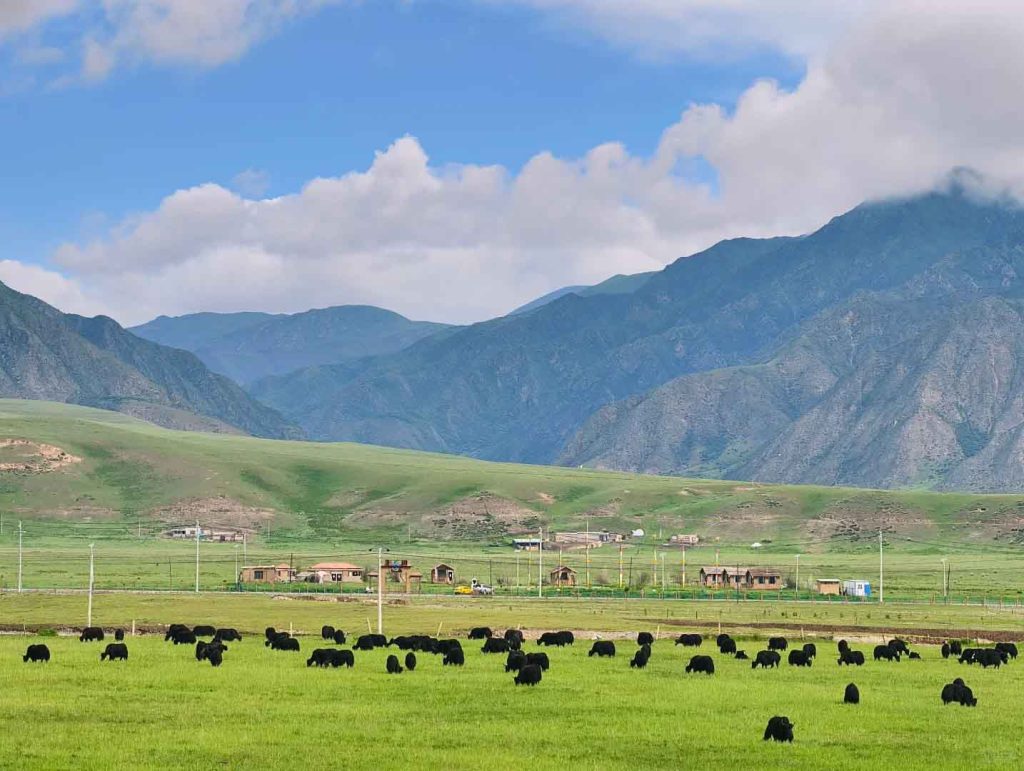
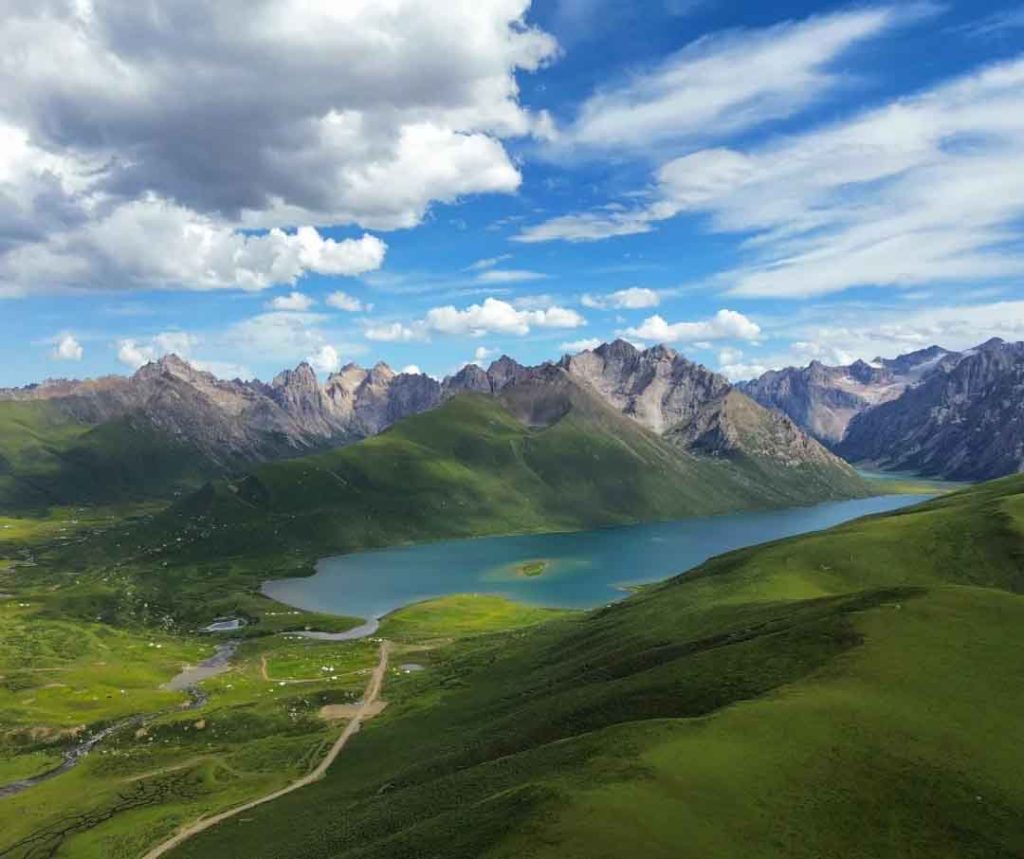
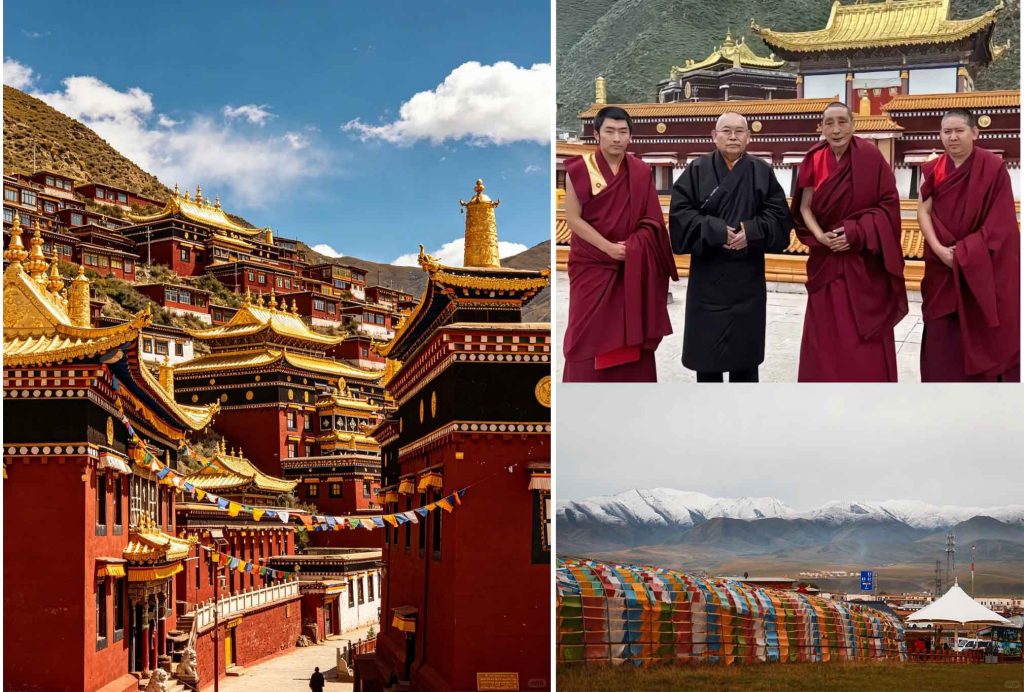
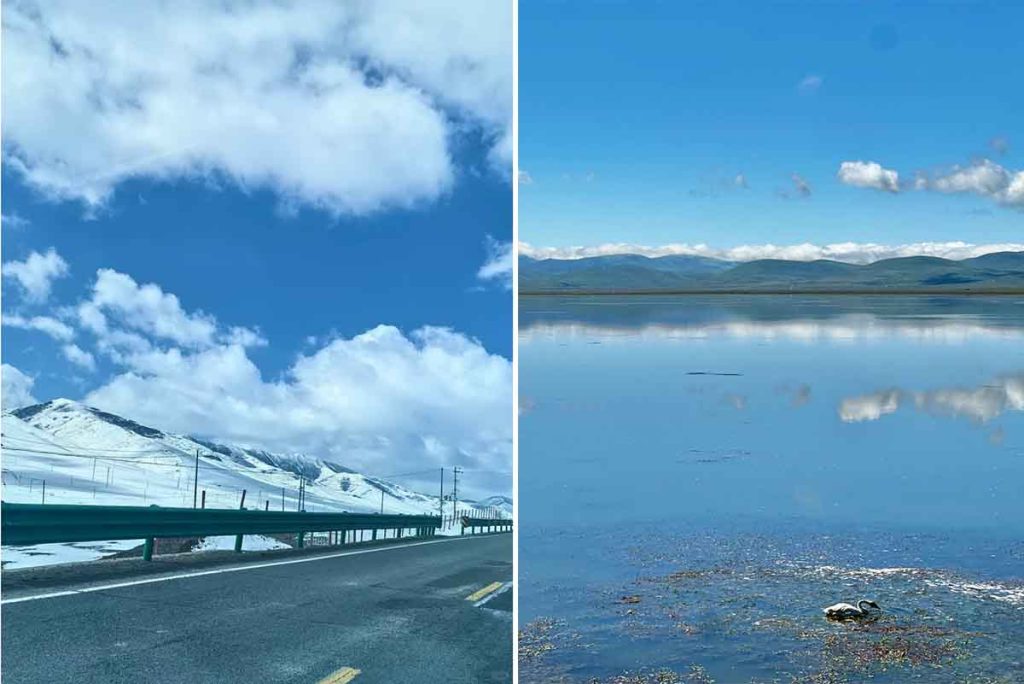
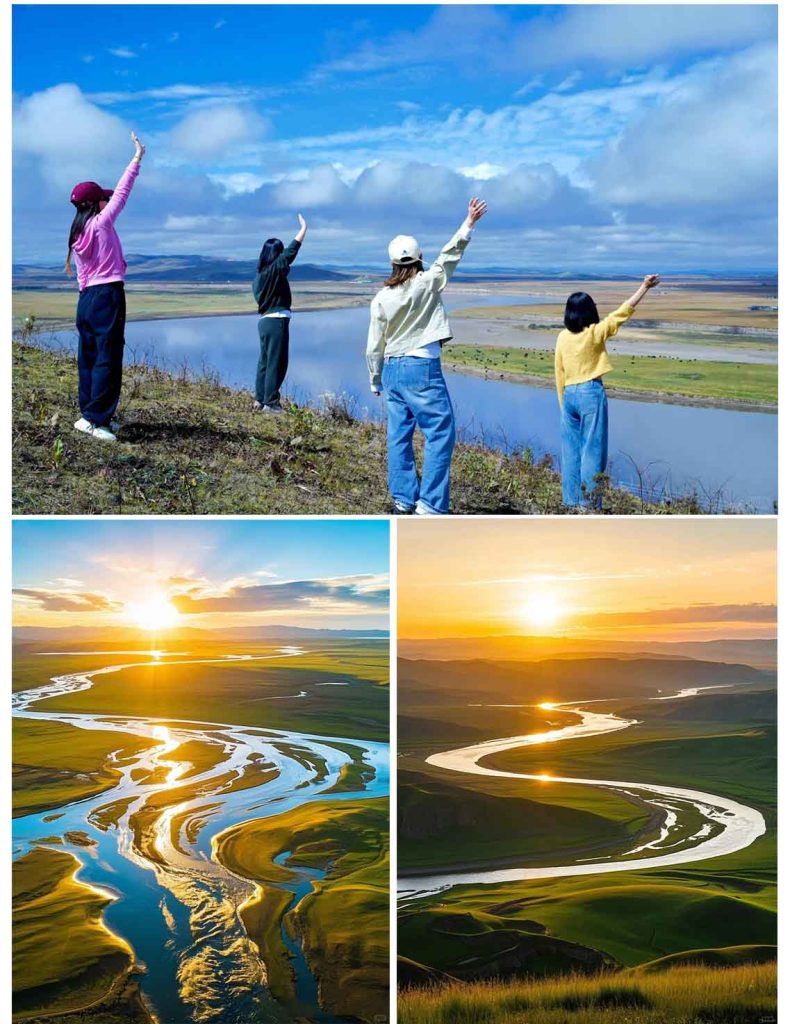
✔ Endless highland grasslands dotted with herds of cattle and sheep
✔ Crystal-clear highland blue skies with prayer flags fluttering in the wind across the mountains
✔ Golden-roofed ancient temples built against the mountains, with endless pilgrimage corridors
✔ Constant chanting at dawn and dusk, devout pilgrims walking slowly
✔ Valleys shrouded in clouds and mist, smoke rising from primitive Tibetan villages
✔ The vast Yellow River headwaters wetlands where rivers and lakes merge in healing harmony
✔ Silent snow mountains in the distance, clean and pure highland landscapes
✔ Far from urban noise, a relaxed and healing Tibetan slow life
When the car enters the grassland and yaks and white stupas appear by the roadside, that feeling is already very close to the traditional perception of the Tibetan lands.
Many people visiting here for the first time say:
“So you don’t have to go to Tibet to experience the Tibetan region.”
Second, less intense altitude sickness pressure, more suitable for first-time highland travel
This is the main reason I recommend Gannan.
Many people prepare for months before going to Tibet for the first time.
Worried about altitude sickness.
Worried about not sleeping well.
Worried their body won’t adapt.
As a result, physical fatigue affects the experience upon arrival.
Gannan is much more friendly.
Altitude in most areas:
- Xiahe about 2900m
- Langmusi about 3300m
- Zagana about 3000m
- Ruoergai Grassland about 3400m
Higher altitude spots are concentrated in the western Sichuan area: the core viewing platform of Lianbaoye Scenic Area reaches over 4500 meters, with average mountain peaks over 4000 meters, serving as the high-altitude challenge point for the entire trip; those with weaker stamina or prone to altitude sickness should slow their pace
Although the entire region is a plateau, compared to Lhasa, Namtso, and the Everest area, the overall altitude is gentler with higher oxygen content and a much lower adaptation threshold.
You can still encounter crystal-clear blue skies, transparent air, and boundless wilderness, fully experiencing the unique vastness of the Tibetan lands, without turning the journey into a grueling physical test.
For the first time entering the Tibetan region, comfort is more important than challenge.
Three, Gannan’s rare human touch: vibrant, uncontrived authentic Tibetan atmosphere
Nowadays, too many cultural tourism scenic spots are heavily commercialized, filled with assembly-line performances.
But the entire land of Gannan fully preserves the original daily life of Tibetan people.
At dawn, the long horns of the monastery echo in the wind, herders ride motorcycles to drive cattle and sheep, white-haired elders slowly pray while circling the pilgrimage corridor, and children chase and play freely on the meadows.
What you see is not a staged performance, but the ordinary daily life of locals.
This unadorned authentic human touch is also the reason why visitors from Hong Kong and Taiwan can’t stop thinking about it after visiting.
One, Labrang Monastery: The world’s Tibetan studies institute, the first stop to immersively understand Tibetan Buddhism
If you can only choose one must-visit monastery in Gannan, I recommend Labrang Monastery first, also a must-visit holy site for Hong Kong and Taiwan Buddhist pilgrims.
Stepping here for the first time, there is no overwhelming noise, only peace in the heart.
The world’s longest 3.5 km pilgrimage corridor stretches forward, with over a thousand prayer wheels quietly turning; pilgrims walk slowly, and clusters of golden-roofed temples shine in the sunlight.
This is never just a tourist spot; faith is fully integrated into daily life.
Even without understanding Tibetan Buddhist history, walking slowly around the monastery once and climbing Gongtang Pagoda to overlook the entire temple will leave a lasting touch in your heart
Two, Milarepa Buddhist Pavilion: The only nine-story Buddhist pavilion in the entire Tibetan region, a treasure trove of Buddhist culture
A niche Buddhist secret spot in Hezuo that cannot be missed en route, deeply loved by Hong Kong and Taiwan meditation visitors.
The entire nine-story pavilion is vermilion red, the only temple in the Tibetan region that gathers patriarchs of all sects.
Seventeen hundred Buddha statues are displayed by level, with murals and thangkas fully outlining the lineages of Tibetan Buddhist sects; each level is a realm, suitable for quiet worship and detailed study of Buddhist origins.
Three, Langmusi|Oriental Little Switzerland: A town spanning two provinces, a Buddhist fairyland with twin temples
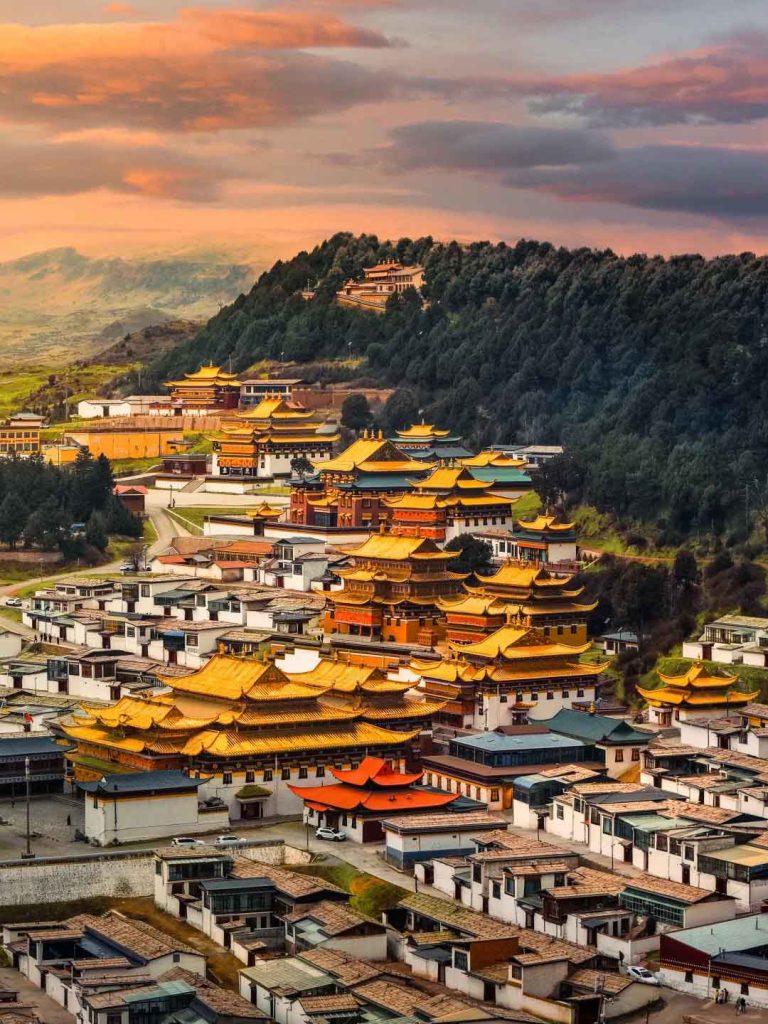
The “Oriental Little Switzerland” that countless Hong Kong and Taiwan tourists flock to, combining scenery and Buddhism with high recognition.
A two-meter-wide Bailong River divides Gansu and Sichuan provinces, with Saichi Monastery on the north bank in Gansu and Gerdi Monastery on the south bank in Sichuan facing each other across the river; one town with twin temples, a rare and shocking sight.
Saichi Monastery’s golden roof is majestic, and the sky burial platform behind the mountain allows one to feel the primitive Tibetan view of life and death; Gerdi Monastery enshrines the relics of a living Buddha from over three hundred years ago, with monks debating scriptures at regular times daily, a rare blessing.
Red stone cliffs, streams and meadows, morning mist and temples blend together, offering both the freshness of Swiss mountains and the profound Tibetan Buddhist heritage; hiking the Namo Grand Canyon also leads to the Fairy Cave at the source of the Bailong River.
Four, Bingling Temple Grottoes: A thousand-year Buddhist cave on the Yellow River, a historic site of Han-Tibetan Buddhist fusion
The first cultural gem departing from Lanzhou, highly attractive to Hong Kong and Taiwan tourists who love ancient Buddhist art.
Carved into cliffs during the Western Jin Dynasty, it is the earliest extant dated Buddhist grotto in China, with Buddha niches of various sizes along the Yellow River cliffs, clay sculptures and stone carvings spanning more than ten dynasties.
On one side is the aesthetic of Central Plains grotto statuary, on the other fused with northwestern Tibetan Buddhist styles; landscapes and stone Buddha statues blend in quiet, ancient simplicity.
Five, Zagana: A severely underrated Tibetan-style mountain paradise
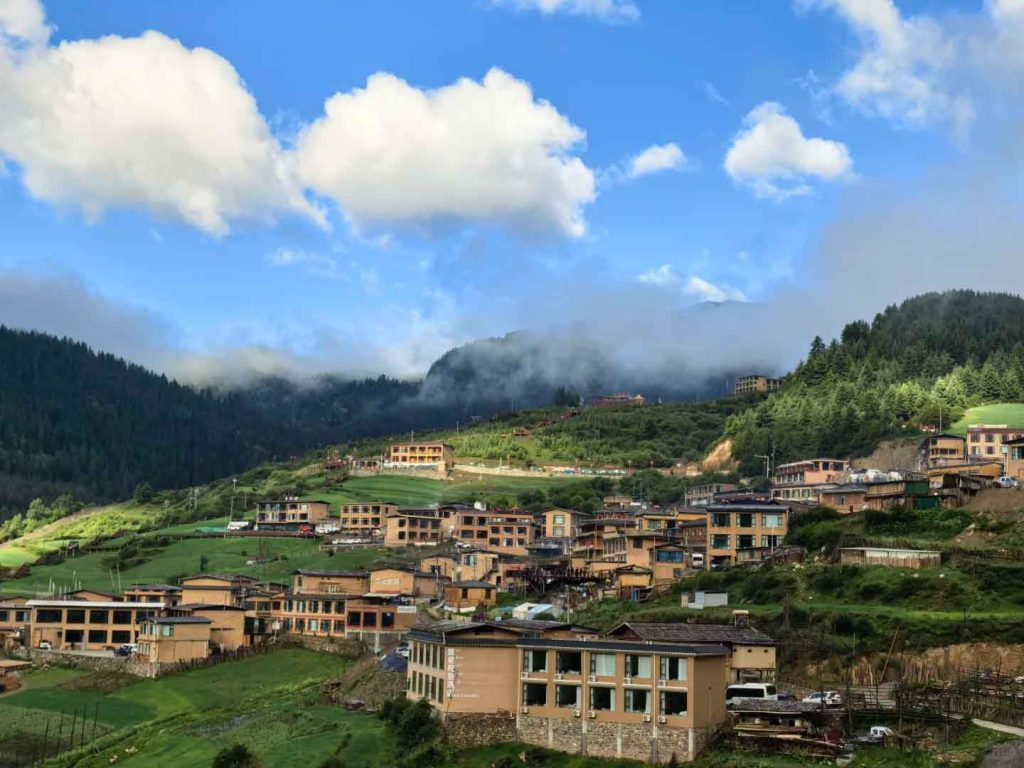
Temples carry spiritual faith, while Zagana hides the unique natural poetry of the Tibetan lands.
At first sight, it feels like entering an isolated movie secret realm, with stone mountains embracing the village, undulating meadows dotted with wooden houses, and flowing clouds slowly passing through the valley.
Unlike the endless grasslands, this is a unique highland mountain dwelling scene.
Many tourists say it resembles Switzerland, but compared to internet-famous spots, Zagana better matches the paradise in people’s hearts.
It is recommended to stay overnight; morning clouds and mist, evening glow—each has its own charm.
Six, Ruoergai・Flower Lake: Experience the boundless vastness of the Tibetan lands firsthand
Many people’s first boundless grassland in life is encountered in Ruoergai, Gannan.
Far from a small lawn in an urban park, as far as the eye can see, heaven and earth connect, and the wind-blown grass waves like a surging green sea.
In midsummer, wildflowers cover the ground, cattle and sheep scattered like stars dotting the earth.
Flower Lake does not win with majestic scale; its moving quality lies in its quiet healing.
Sitting quietly by the lake, watching the breeze ripple the sparkling surface, is the best moment to empty the mind.
Four: Beginner-friendly itinerary, suitable for Hong Kong and Taiwan tourists, choose as needed
Many beginners always want to check off all attractions in one trip, rushing around all day, exhausting body and mind.
But Gannan is never suitable for a whirlwind tour.
Suitable for slowing down the driving pace, with short daily drives at a leisurely speed. Choose a small town to stay overnight, quietly await the mountain sunset, sip a cup of warm butter tea, and feel the day-night temperature difference on the plateau.
After such a relaxed journey ends, you won’t feel exhausted all over, only a heart full of reluctance to leave.
3 Days 2 Nights | Buddhist Worship & Meditation Special Route (Exclusive for Dharma Enthusiasts)
Lanzhou → Xiahe Labrang Monastery → Sangke Grassland → Hezuo Milarepa Buddhist Pavilion → Meiren Grassland → Prayer Flag Tunnel → Lanzhou
✅ Suitable for: Hong Kong and Taiwan practitioners traveling specifically for Buddhist worship and pilgrimage, those who prefer Tibetan Buddhist culture, have limited vacation time, and focus solely on temple and cultural experiences
✅ Route advantages: The entire itinerary focuses on core Tibetan Buddhist monasteries. Visit the world’s Tibetan Buddhist academy and the only nine-story Buddhist pavilion in Tibet in one trip. Short driving distances and a relaxed pace make it ideal for quiet visits and blessings.
4 Days 3 Nights | Classic Introductory Loop
Lanzhou → Xiahe Labrang Monastery → Sangke Grassland → Langmu Temple (Little Switzerland of the East) → Flower Lake → Zhagana → Locke Road → Hezuo Milarepa Buddhist Pavilion → Meiren Grassland → Prayer Flag Tunnel → Lanzhou
✅ Suitable for: First-time visitors to the Amdo Tibetan region, short vacations from Hong Kong and Macau, light hiking and leisure, first-time experience of Tibetan landscapes
✅ Route advantages: Focuses on grasslands and monastery scenery. Moderate mileage without rushing. Check off the world’s longest prayer wheel corridor and the secret double-temple site at the Gansu-Sichuan border. Cross the popular Locke Road for an easy introduction to the Tibetan region.
6 Days 5 Nights | Panoramic In-Depth Loop (Popular Long-Distance Choice)
Lanzhou → Xiahe Labrang Monastery → Hezuo Milarepa Buddhist Pavilion → Locke Road → Zhagana → Gannan Little Duku Highway → Ruoergai Flower Lake → First Bend of the Yellow River → Awancang Wetland → Langmu Temple (Little Switzerland of the East) → Lanzhou
✅ Suitable for: Hong Kong and Taiwan family trips, landscape photography enthusiasts, in-depth Buddhist worship and pilgrimage, long slow-paced vacations, those wanting to check off all cultural and natural highlights of Gannan and Sichuan in one trip, foreign in-depth cultural visitors
✅ Route advantages: Full coverage of Gannan and Sichuan, connecting the thousand-year-old Yellow River grottoes, nine-story comprehensive Buddhist pavilion, stone city of Zhagana, popular Little Duku scenic highway, Ruoergai wetland flower sea, Yellow River First Bend sunset, Awancang Yellow River source wetland, and the twin-temple town of Langmu Temple. Balances Buddhist heritage, grasslands, canyons, rivers and lakes, and lesser-known scenic roads. Moderate pace, no repeated sections. Sunrise, sunset, starry skies, and cultural temples all in one trip. A benchmark route for Hong Kong and Taiwan visitors seeking an in-depth experience of Amdo Tibet.
Five: Final Notes
For your first trip to the highland Tibetan region, there’s no need to start with a challenging long-distance route. Travel is not a competition of who goes farthest or checks off the most spots—it’s an experience to enjoy. On your first highland trip, comfort matters most. Don’t push yourself.
Gannan lacks the extreme vastness of Tibet, the majestic desolation of Ali, or the awe-inspiring legendary views of Mount Everest. Yet it is gentle and inclusive—featuring grottoes, Buddhist pavilions, rich Tibetan Buddhist culture, and Swiss-like healing mountain scenery. Many Hong Kong and Taiwan visitors choose Gannan as their first step into the highlands and Tibetan culture.
It turns out that Tibetan landscapes are not only found in distant Tibet. The gentle Gannan also deserves to be your first Tibetan journey.
No matter what type of traveler you are, Gannan offers the perfect experience:
- For quiet prayer and blessings: Visit Labrang Monastery and Milarepa Buddhist Pavilion, follow locals in circumambulation, and enjoy the peaceful atmosphere—truly relaxing.
- For photography and check-ins: The morning mist at Zhagana and the fairyland scenery at Langmu Temple are incredibly photogenic—perfect for sharing on social media.
- For driving and scenic routes: Be sure to drive Locke Road or Gannan Little Duku Highway—enjoy the freedom of the road with beautiful views all the way.
- For family trips with elders and children: The vast grasslands of Sangke, Meiren, and Awancang are ideal—spacious, with plenty of stops, and never tiring.
Whether you want to visit temples, take beautiful photos, go hiking, drive scenic roads, or enjoy a family vacation, we can arrange everything clearly. No need to rush or wake up early. Go wherever and stay as long as you like—tailored to your preferences.
Gannan has diverse scenery and is beginner-friendly. You can have a great time without complicated planning.
Want a personalized Gannan itinerary? Message us now or contact us directly to chat with our travel planner! Tell us your schedule and ideas, and we’ll take care of the rest!

Scan to add WeChat