

Fall is the most beautiful season in China.
Some people say that China has only one autumn.
In fact, China has countless autumns.
It could be the first ray of sunlight breaking through the morning mist in Kanas, Xinjiang; it could be the fiery golden hues of the Ejina poplar forest; it could be the vibrant reflections on the waters of Jiuzhaigou; or it could be the colorful forests stretching across the mountains at the foot of the snow-capped peaks in western Sichuan.
Starting in September, the north is the first to usher in the golden autumn; in October, the entire country is ablaze with colorful foliage; and in November, the south still retains its last vestiges of vibrant colors.
If you can only plan one fall trip a year, these 10 places pretty much capture the most beautiful aspects of autumn in China.
1. Kanas, Xinjiang | The Ultimate Autumn Destination in China
Best time to visit: Late September–Early October
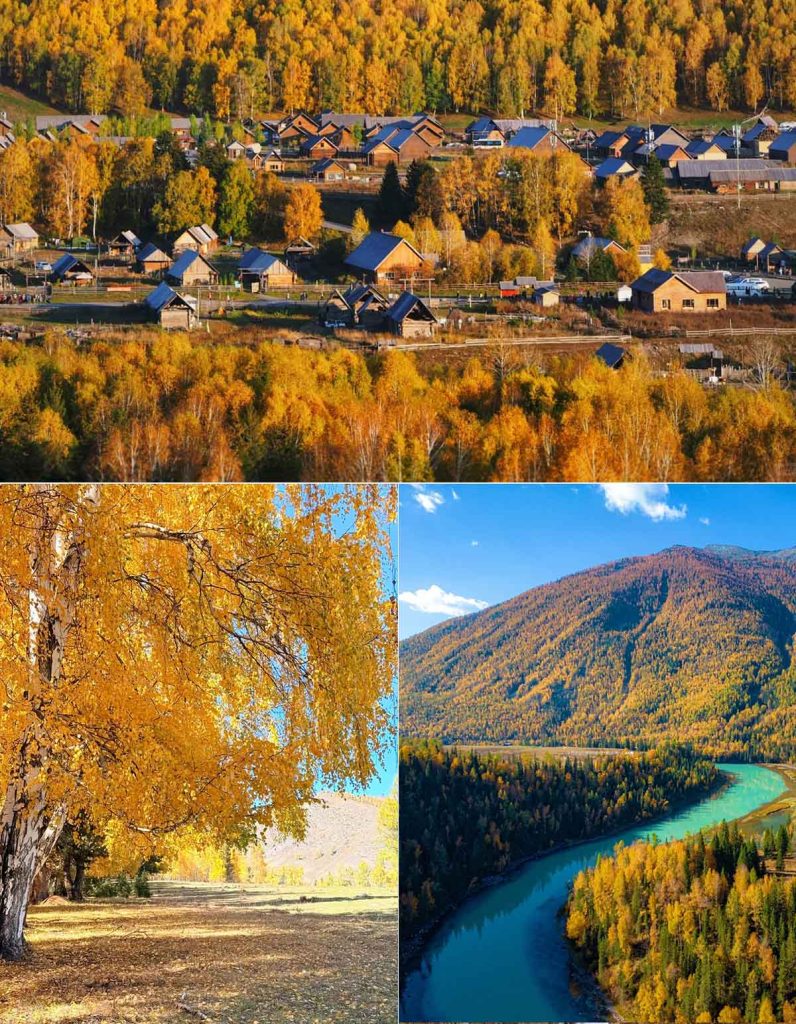
If they had to choose just one place to visit in China this fall, most photographers would vote for Kanas.
Starting in late September each year, the Altai Mountains enter the most colorful time of the year. The birch forests are the first to turn golden yellow, the larch trees gradually take on a reddish hue, the snow-capped mountains in the distance stand silently year-round, and the lakes retain their stunning emerald green color.
Among them, the most iconic are Shenxian Bay, Yueyang Bay, and Wolong Bay.
In the early morning, as the first rays of sunlight pierce the valley and the morning mist slowly rises, the entire Shenxian Bay seems to float amidst a sea of clouds. The lake’s surface is as calm as a mirror, perfectly reflecting the golden forests, snow-capped mountains, and blue sky; every time you press the shutter, it feels as though you’re capturing a scene from a fairy tale.
If you venture further into Hei Village, you’ll discover a different kind of fall.
Wispy plumes of smoke rise from the log cabins, cattle and sheep roam leisurely, and birch forests surround the entire village. As the evening sun casts its glow on the roofs of the log cabins, the whole of Hemu seems draped in a golden filter—it is no coincidence that it has been hailed as “China’s Most Beautiful Village.”
Reasons for Recommendation:
- China’s Most Beautiful Colorful Forests
- Morning Fog and Snow-Capped Mountains in the Same Frame
- A Photographer’s Paradise
- A Driver’s Paradise
2. Jiuzhaigou, Sichuan | God’s Spilled Palette
Best time to visit: Mid-October through late October
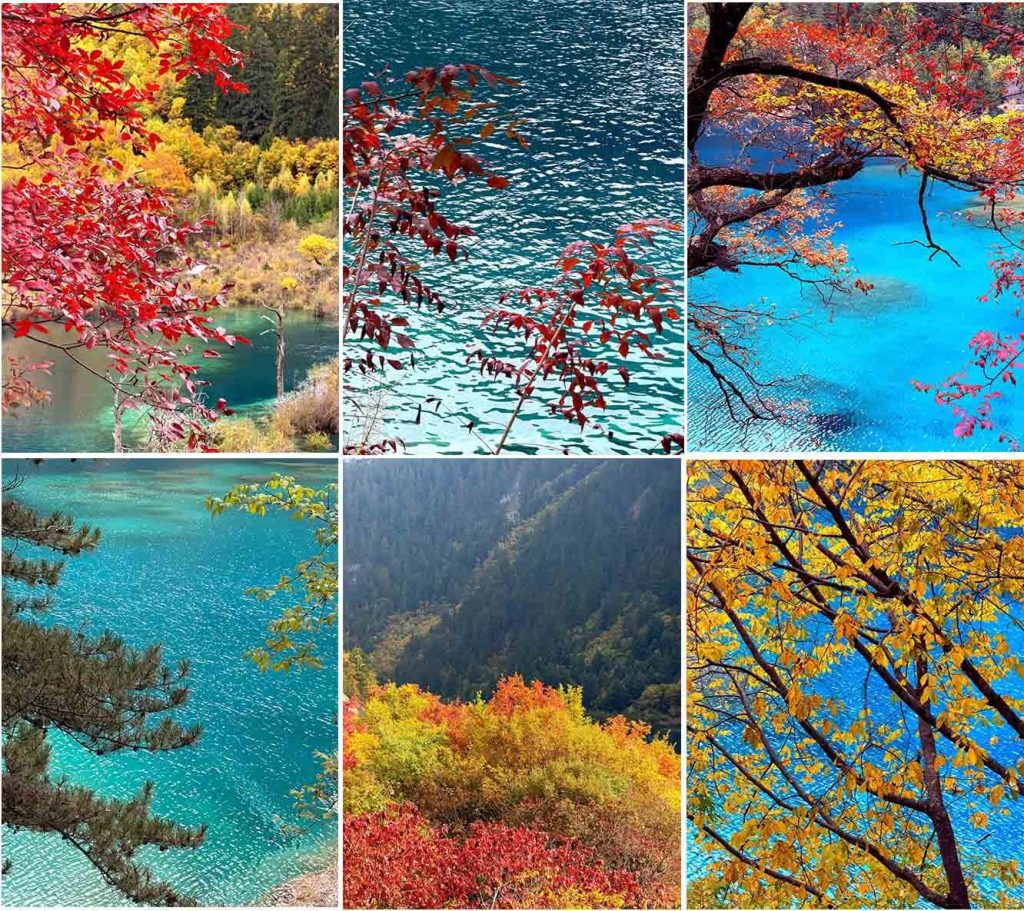
Jiuzhaigou fulfills nearly every fantasy people have about autumn.
The greatest charm of this place lies not only in the autumn foliage, but also in the lake.
In the fall, Wuhua Lake, Changhai, Jinghai, and Panda Lake come together to create the world’s most vibrant palette of colors.
Deep blue, emerald green, golden yellow, and fiery red blend together, making the entire valley look like a giant oil painting.
Especially in the early morning, the lake’s surface is perfectly still, with the colorful forests, snow-capped peaks, and blue sky all perfectly reflected in it—so beautiful that it’s almost impossible to tell what’s real and what’s a reflection.
If Kanas is all about vastness, then Jiuzhaigou is all about refinement.
Every few dozen meters, the color changes; each lake resembles a gem of a different hue.
3. The Poplar Forest of Ejina, Inner Mongolia | A 3,000-Year-Old Legend of Life
Best time to visit: Early October–Late October
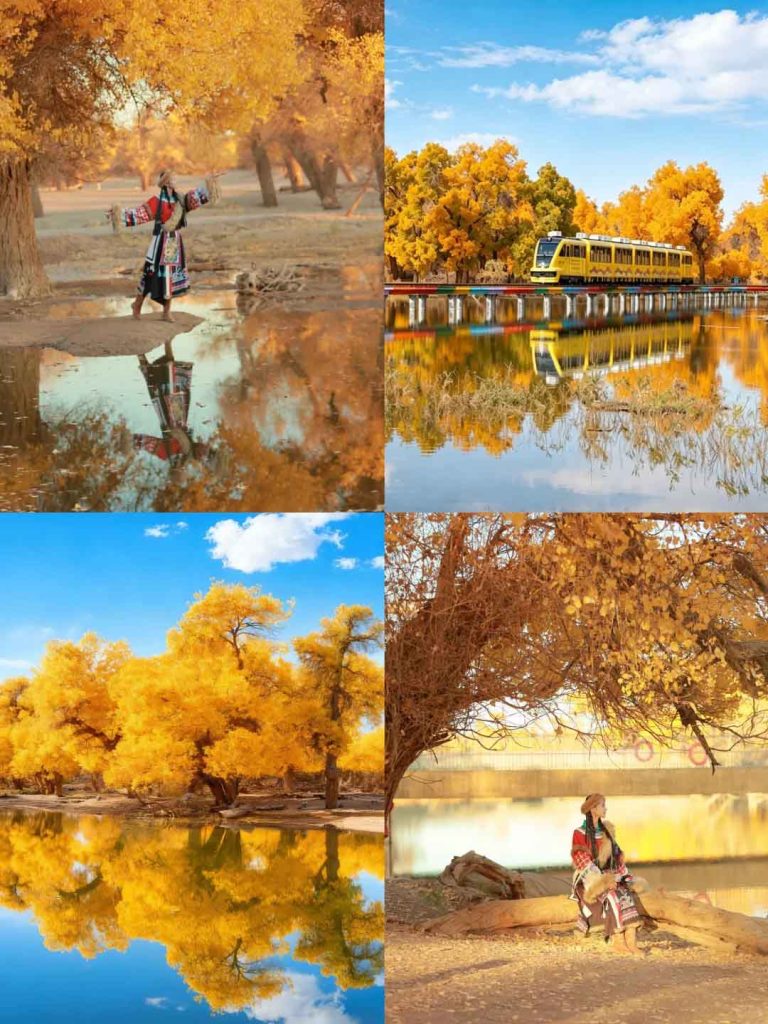
China’s most breathtaking shade of gold isn’t found in the forests, but in the desert.
The Ejina Poplar Forest is hailed as one of the world’s three great poplar forests.
There is a well-known saying here:
Born to live for a thousand years without dying, dead for a thousand years without falling, fallen for a thousand years without decaying.
When autumn arrives, hundreds of thousands of mu of poplar forests turn completely golden, creating a strikingly beautiful scene together with the blue sky, the desert, and the Ruoshui River.
Especially at sunrise and sunset, when the poplars are reflected in the lake, it seems as if the entire world has been bathed in gold.
When you come here, you’re not just enjoying the fall—you’re also experiencing the power of life.
4. Daocheng Yading, Sichuan | The Last Shangri-La
Best time to visit: Early October
Daocheng-Yading is a place that many people must visit at least once in their lifetime.
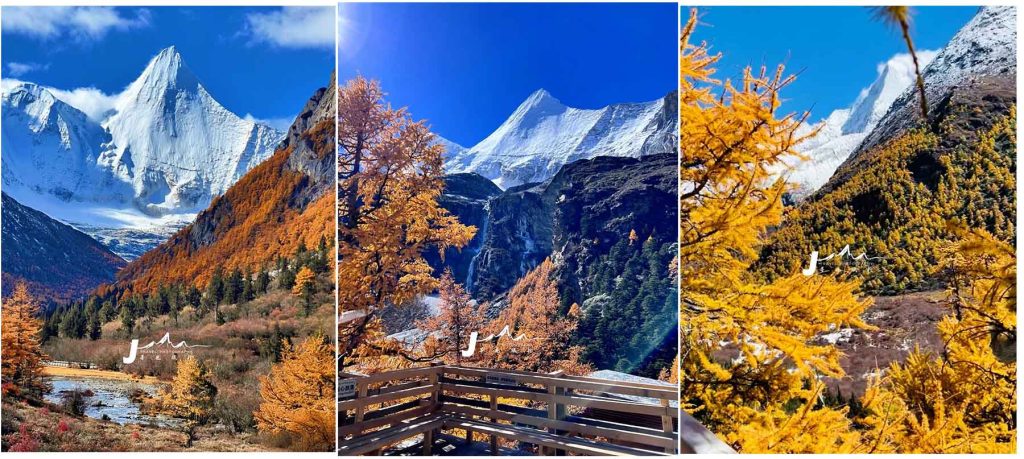
In the fall, the snow-capped mountains here are even whiter, the alpine lakes are even clearer, and vast stretches of colorful alpine forests gradually change from green to golden yellow.
Zhenzhu Lake quietly reflects the sacred Mount Xiannai.
Milk Lake and Five-Color Lake are set among the mountains like sapphires.
When the sunlight shines on the snow-capped peaks, the whole world falls silent, leaving only the sound of the wind.
Not only does this place boast magnificent natural scenery, but it also features a rich Tibetan culture, lending the fall season an air of sacredness.
5. Guangwu Mountain, Sichuan | Asia’s Longest Natural Corridor of Autumn Foliage
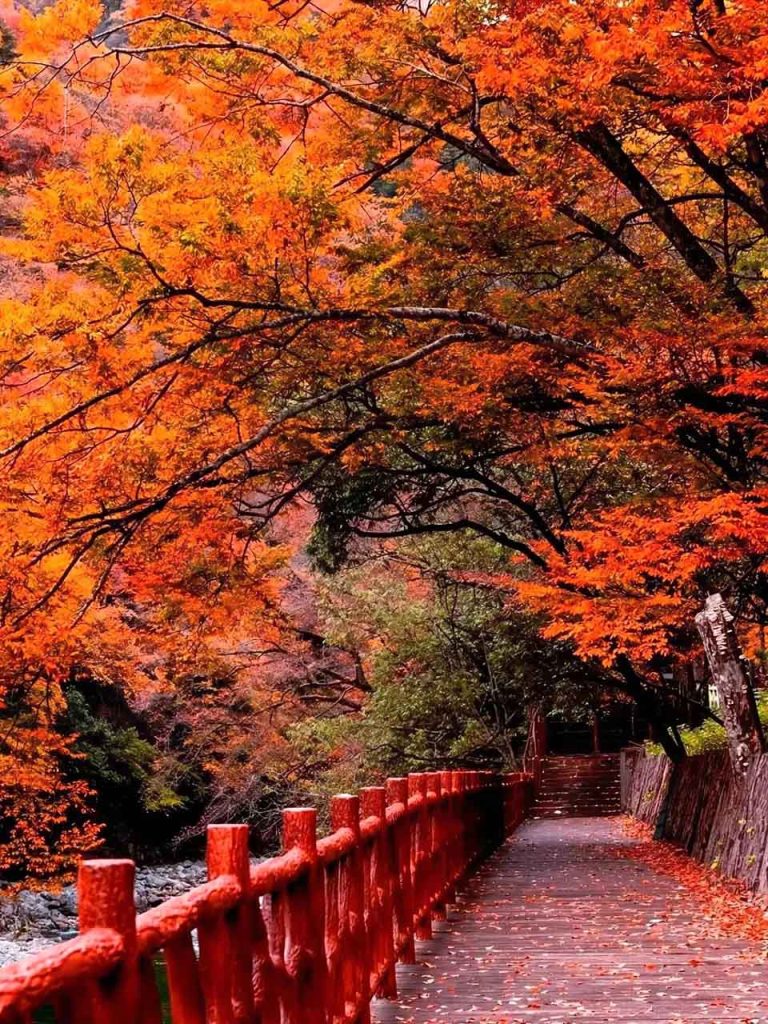
Best time to visit: Late October–mid-November
If Jiuzhaigou is known for its lakes, then Guangwu Mountain is the place to go specifically to see the autumn foliage.
Every year in late fall, millions of mu of red leaves change color all at once.
The mountains and fields are gradually transitioning from yellow to orange to red, creating an incredibly rich palette of colors.
The stream in Heixiong Gou winds its way through the crimson foliage; its crystal-clear waters reflect the colorful forest, filling the entire gorge with a poetic atmosphere.
This area is known as the “Home of Autumn Foliage in China” and is also one of the country’s premier destinations for viewing autumn foliage, offering the longest viewing season.
6. Shicheng, Wuyuan, Jiangxi | An Ancient Huizhou Village in the Morning Mist
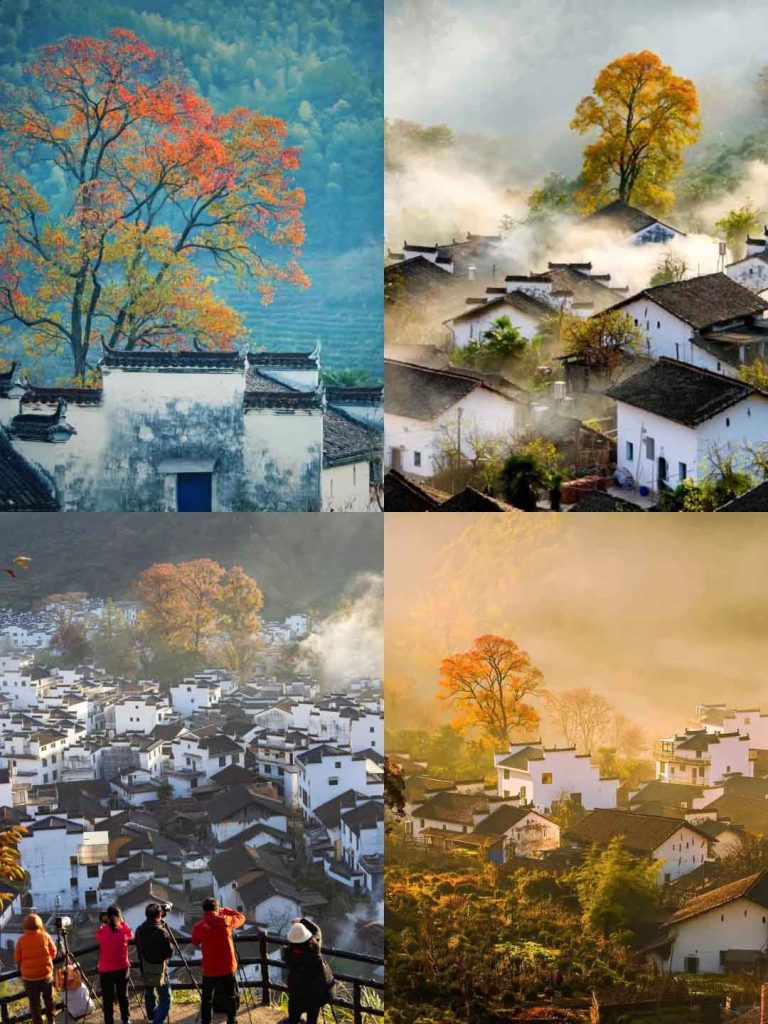
Best time to visit: Mid-November–Early December
Compared to the majestic mountains and rivers, Shicheng is more like a tranquil ink-wash painting.
Every morning, the entire village is shrouded in morning mist.
White walls and black-tiled roofs appear and disappear in the distance; hundreds of ancient maple trees are draped in red and yellow, and sunlight filters through the trees onto the village, making it feel as if you’ve stepped back in time to ancient Huizhou.
There’s no hustle and bustle here—just the crowing of roosters, wisps of smoke rising from kitchens, and a slow-paced life.
For those who love humanistic photography, this is arguably the most poetic place in China to experience autumn.
7. Shangri-La, Yunnan | The Most Romantic Autumn Scenery on the Plateau
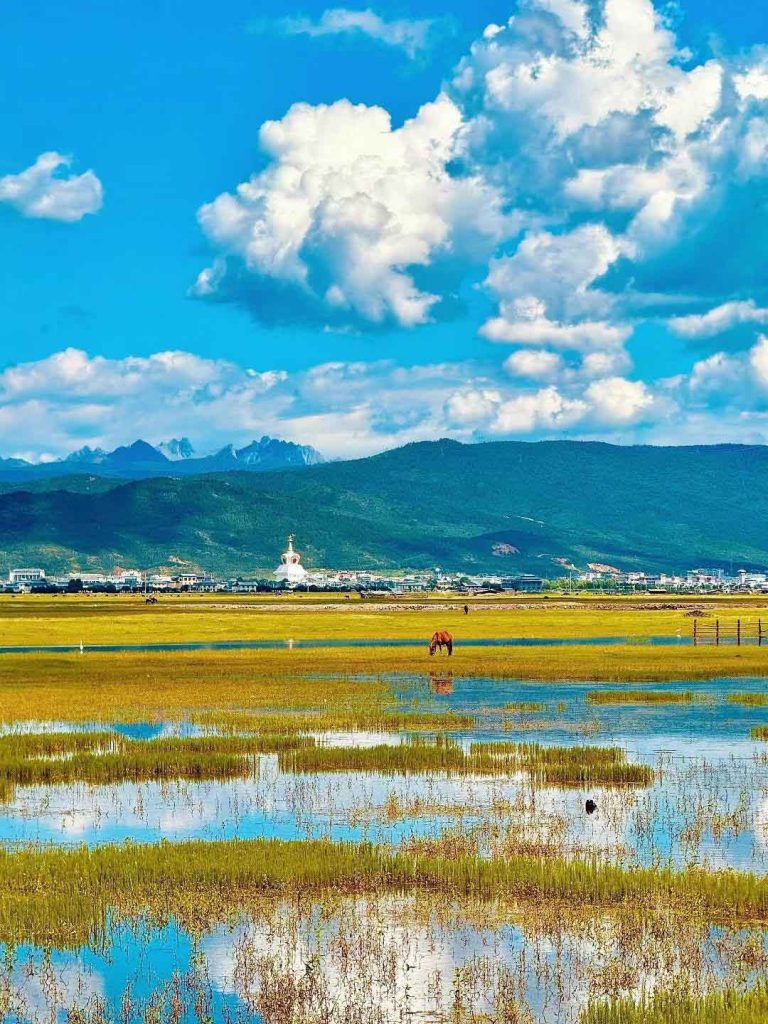
Best time to visit: Mid-October–Early November
As autumn arrives at Pudacuo National Park, the high-altitude lakes, meadows, and colorful forests come together to form a serene landscape.
The surface of Shudu Lake is as calm as a mirror.
The golden forest is reflected in it.
The snow-capped mountains in the distance are clearly visible.
Herds of yaks and horses graze leisurely; time seems to slow down here.
Autumn in Shangri-La may not be as breathtaking as that in Kanas, but it offers a different kind of soothing tranquility.
8. Beijing | Autumn in Beiping Is Like Heaven
 Autumn at Xiangshan, Beijing
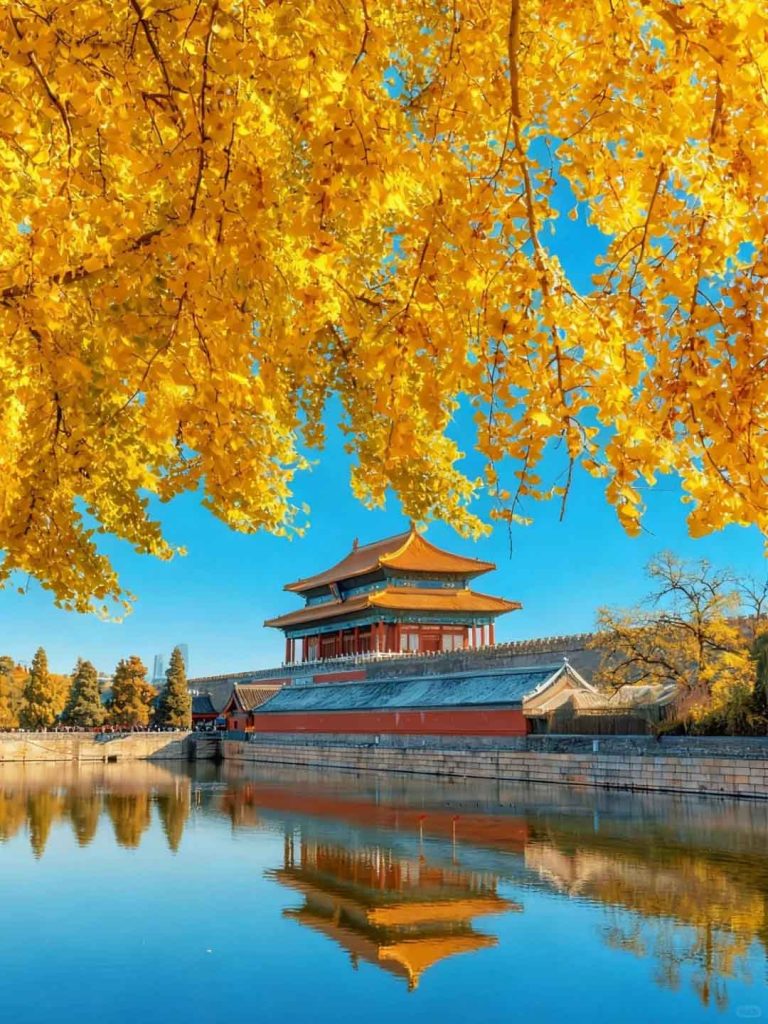 Autumn at the Forbidden City in Beijing
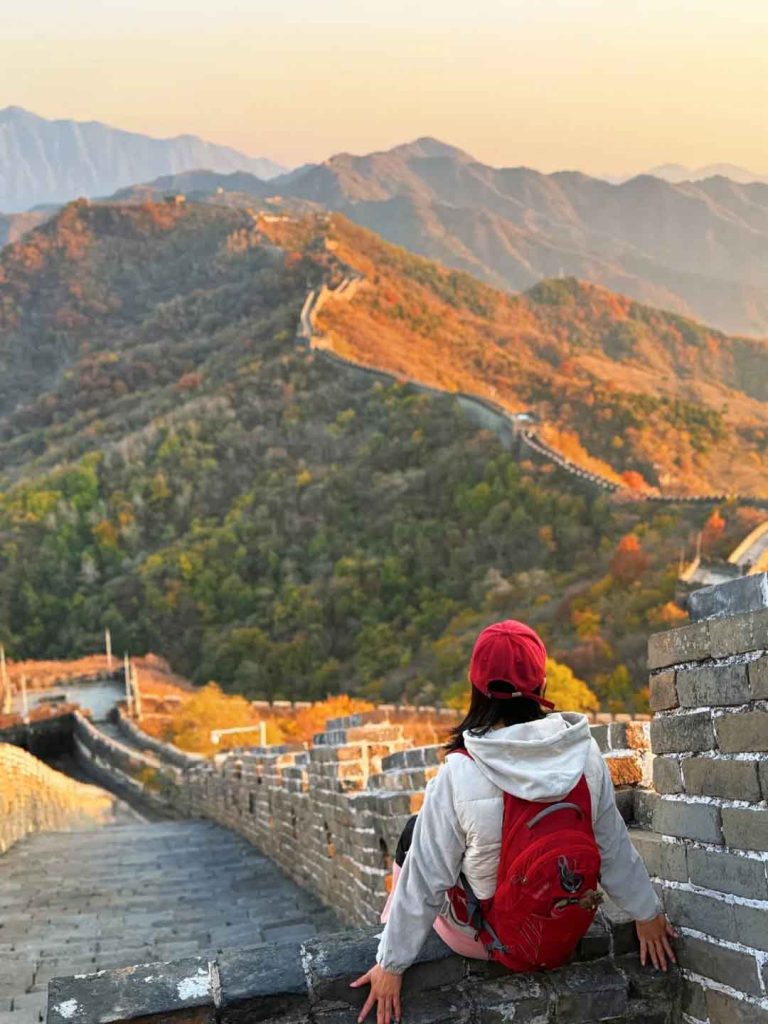 The Great Wall at Mutianyu, Beijing
Best time to visit: Mid-September–Mid-November
If one were to select China’s most culturally rich autumn destinations, the “paradisiacal” autumn in Beiping—as described by Lao She—would certainly make the list.
By following the rule of enjoying autumn scenery from the mountains to the plains, you can take in a wealth of sights—including the beacon fires along the Great Wall, imperial gardens, ginkgo trees at ancient temples, and the autumn colors of the hutongs—all within just two months.
Among them, the Xiangshan and Mutianyu sections of the Great Wall are hailed as “the pinnacle of Beijing’s autumn scenery.”
Every year from late October through November, the mountainsides covered in Chinese sumac gradually turn the color of blazing fire, joining the winding ancient Great Wall and the red walls with golden tiles to create Beijing’s most iconic autumn scenery.
Continue on to the Forbidden City and the Temple of Earth, where the setting sun casts its gentle glow across the red walls, and the golden ginkgo trees bathe the entire Forbidden City in a poetic light; as you stroll deep into the hutongs, the autumn breeze sweeps over the blue-gray bricks and gray tiles, making it feel as though you’ve traveled back in time to Beiping a century ago.
Autumn in Beijing is not merely a scenic view, but a long poem of autumn frozen in time.
Every time you pause, you might discover a piece of history that leads to the next breathtaking moment.
9. Changbai Mountains, Jilin | The Most Fairy-Tale-Like Autumn in the North

Best time to visit: Late September–Early October
Autumn always arrives earlier in the Changbai Mountains than elsewhere.
The mountain range is covered by a forest ablaze with autumn colors.
Tianchi Lake lies peacefully nestled among the mountains.
Morning mist swirls over the Songjiang River.
Red and yellow leaves intermingle with evergreen coniferous forests, creating a rich palette of colors.
If you’re lucky, you might even catch the first snowfall.
The golden autumn leaves, set against the backdrop of snow-capped mountains, make this one of China’s most fairy-tale-like autumn scenes.
10. Hulunbuir | The Last Celebration on the Golden Grasslands
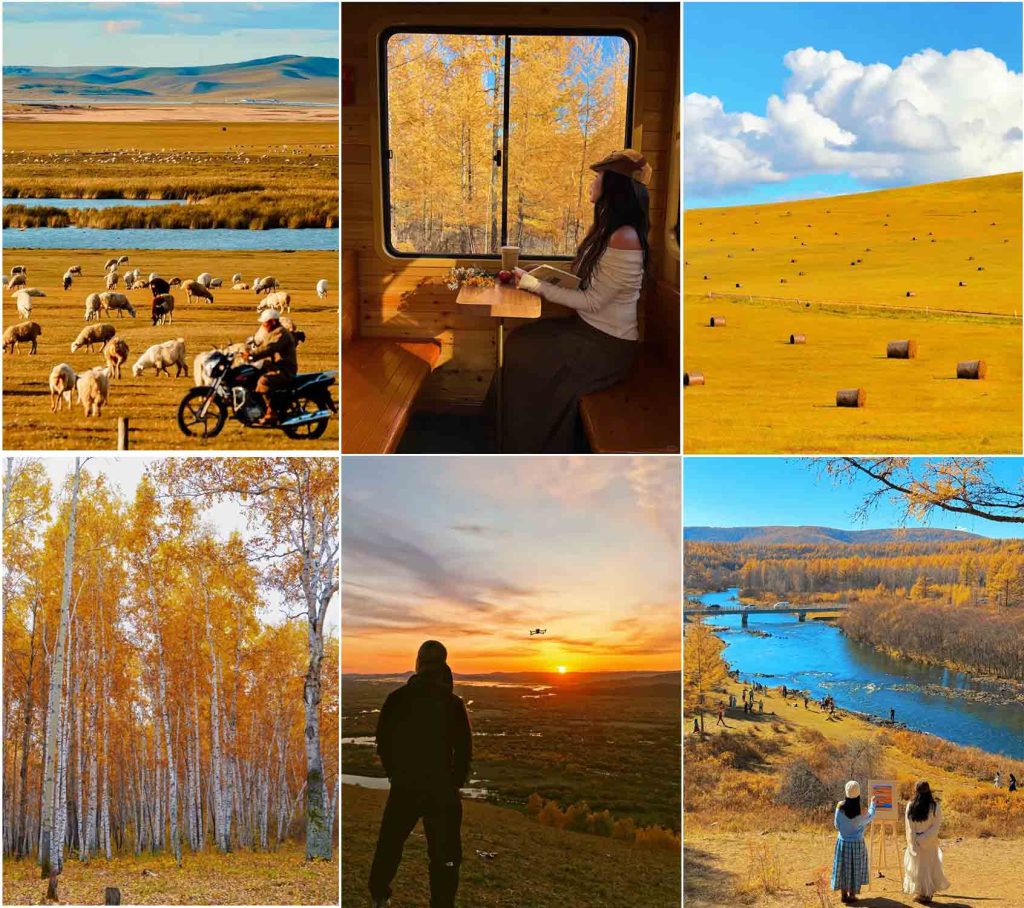
Best time to visit: Mid-September–Early October
Many people know that Hulunbuir is beautiful in the summer, but they don’t realize that its fall is even more enchanting.
As the grasslands gradually turn golden, morning mist begins to appear over the Ergun Wetlands, the birch forests are cloaked in gold, and the entire landscape becomes vast and serene.
Traveling along the Ergun River, cattle and sheep graze leisurely, herds of horses gallop by, and the forests in the distance gradually turn golden.
There are no crowds here, only the sound of the wind blowing across the grasslands.
If you enjoy road trips, Hulunbuir is sure to be one of the most unforgettable fall journeys of your life.
11. A Guide to Autumn Sightseeing in China
| Region | Best Time to Enjoy the Fall Foliage |
| Kanas | Late September–Early October |
| Changbai Mountains | Late September–Early October |
| Hulunbuir | Mid-September–Early October |
| Jiuzhaigou | Mid-October–End of October |
| Daocheng-Yading | Early October |
| Beijing | Mid-September–Mid-November |
| Shangri-La | Mid-October–Early November |
| Guangwu Mountain | Late October–Mid-November |
| Ejin Poplar Forest | Early October–Late October |
| Shicheng, Wuyuan | Mid-November–Early December |
Fall is worth making a special trip for.
Autumn is never a fixed season, but rather a journey that spans the length of China.
In September, you can welcome the first hints of golden hues in Kanas; in October, you can chase the most vibrant autumn colors in Jiuzhaigou, Western Sichuan, and Ejina; and in November, you can venture into Guangwu Mountain and Wuyuan to bring this year’s autumn to a perfect close amid the crimson leaves and morning mist.
If spring belongs to seas of flowers, summer to grasslands, and winter to snowy landscapes, then autumn belongs to China.
Because this place boasts the world’s richest palette of colors and the most unforgettable mountains and rivers.
If you can only take one trip this fall, why not choose one of these top 10 fall foliage destinations and immerse yourself in the most beautiful parts of China at this time of year? Not sure how to plan your itinerary? Feel free to contact one of our travel consultants anytime to create a customized fall foliage itinerary just for you!
Elephant-Trip | Specializing in Customized Private Tours in China for
2–6 People with Private Vehicle Rentals | Pure Sightseeing with No Shopping | One-on-One Itinerary Planning

Scan the QR code to add me on WeChat