

Planning a trip to China but unsure whether you need a visa?
China has continued opening up to the world in recent years. Foreign tourists from a growing number of countries can enter China via unilateral visa waivers, mutual visa exemption agreements, the 240-hour transit visa waiver, and regional visa-free schemes such as the Hainan policy.
For first-time visitors to China, the priority is not immediately applying for a tourist visa, but to check:
Does my passport qualify for China’s visa-free entry policy?
If you meet visa-free requirements, you may arrange your travel directly. If not, you shall apply for a China L Tourist Visa in advance.
This guide helps foreign travelers planning trips to China quickly understand mainstream visa-free policies, tourist visa requirements and key entry reminders.
Important Notice: China’s entry policies are subject to dynamic adjustments based on diplomatic and immigration management regulations. This article serves only as a travel planning reference. To confirm your eligibility for visa-free entry or visa issuance before departure, please check official updates via the Chinese Consular Service Network, National Immigration Administration, and local Chinese embassies and consulates.
1. To travel to China, the first step is to judge whether you need a visa
For ordinary foreign tourists, you can judge in the following order:
Step 1: Check whether it is a unilateral visa-free country in China.
If it is, reconfirm whether your passport type, entry purpose and planned stay time meet the visa-free requirements.
Step 2: Check whether the visa agreement between ordinary passports has been signed with China.
Ordinary passport holders in some countries can enter China without visa-free agreements with bilateral mutual visa-free agreements.
Step 3: Check if your itinerary is eligible for 240-hour transit visa-free.
If you are not simply ‘coming to China and then returning to the original country of departure’, but traveling from a country to a third country or region through China, it may be in compliance with the 240-hour visa-free transit policy.
Step 4: If the above conditions are not met, apply for an L-word tourist visa.
Simply put:
Visa-free → You can plan travel directly
Not eligible for visa exemption → Apply for L-character tourist visa in advance
2. What are the main visa-free policies in China?
At present, foreign tourists come to China, and the more common visa-free methods mainly include:
- One-sided visa-free
- Mutual visa exemption agreement
- 240-hour transit visa-free
- Hainan regional visa-free
- Special policies such as visa-free Shanghai cruise tour groups
The applicable countries of different policies, the way of entry, the area of stay and the time of stay are different, so it cannot be simply understood as ‘a certain country can enter China casually.’
3. Ordinary passports in 50 countries can enjoy China’s unilateral visa-free
As of August 2026, China 50 ordinary passport holders of countriesImplement a unilateral visa-free policy.
Eligible tourists can enter China-free entry for short-term reasons such as tourism, business, visiting relatives and friends, visiting relatives and friends, exchange visits or transit, etc.No more than 30 days each stay.
European country
France, Germany, Italy, Spain, the Netherlands, Switzerland, Ireland, Hungary, Austria, Belgium, Luxembourg, New Zealand, Poland, Portugal, Greece, Cyprus, Slovenia, Slovakia, Norway Wei, Finland, Denmark, Iceland, Andorra, Monaco, Liechtenstein, Bulgaria, Romania, K Rhodia, Montenegro, Northern Macedonia, Malta, Estonia, Latvia, Russia, Sweden, the United Kingdom.
Asian countries
Brunei, Japan, South Korea, Saudi Arabia, Oman, Kuwait, Bahrain.
America
Brazil, Argentina, Chile, Peru, Uruguay, Canada.
Oceania countries
Australia, New Zealand.
The latest FAQ announced by China Consular Service Network in July 2026 has confirmed that a total of 50 countries are currently applying this unilateral visa-free policy.
The validity period of the visa-free policy
The current policy period is not exactly the same:
- **Brunei: **There are currently no clear policy termination dates
- **Russia: ** Currently executed to December 31, 2027
- **Other 48 countries: ** Currently executed to December 31, 2026
Since the visa-free policy may continue to extend, adjust or increase the country, tourists who plan to travel to China should check the latest official information again before departure.
4. What is mutual visa exemption between China and other countries?
In addition to China unilaterally giving visa-free to some countries, China has also signed with many countries Mutual visa exemption agreement.
But here’s a very misunderstood place:
China and a country have signed mutual visa exemption agreements, which does not mean that all ordinary passport holders of this country can enter China without visa.
Because the types of passports covered by different agreements may be different, including:
- diplomatic passport
- official passport
- Ordinary official passport
- regular passport
- Special documents such as group travel
Therefore, when judging whether the visa is exempt, you must check the specific country and the specific passport type.
For example, the mutual visa exemption policy for ordinary passports between China and Singapore has come into effect, and Singapore ordinary passport holders can be exempted from visas according to relevant regulations for a short period of time.
China and the United Arab Emirates, Azerbaijan, Belarus, Albania, Armenia, Uzbekistan and other countries also have different forms of mutual visa exemption arrangements.
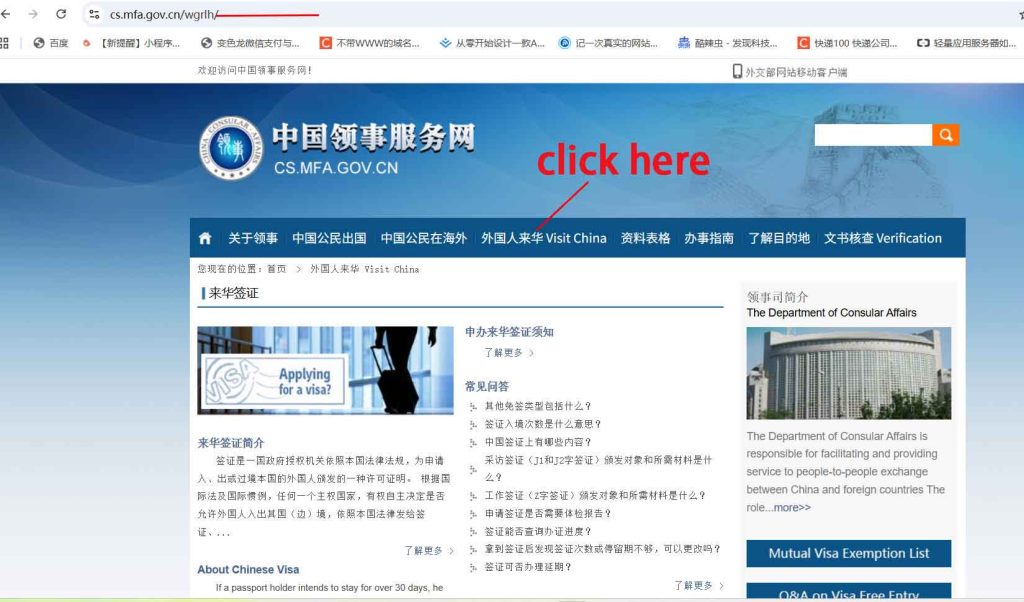
The safest way is to directly check the latest ‘China-Foreign Mutual Visa-free Agreement List’ on China Consular Service Network.
Query URL:https://cs.mfa.gov.cn/gyls/lsgz/fwxx/202504/t20250414_11594222.shtml
5. 240-hour transit visa-free: very suitable for ‘multi-country travel’ tourists
If you plan:
Japan → China → Thailand
or:
USA → China → Singapore
Then in addition to the ordinary visa-free policy, you should also check whether you are in line with China’s240-hour transit visa-free policy.
At present, China has 55 countries Implement a 240-hour transit visa-free policy.
Eligible foreign tourists can enter China from designated ports and stay for the longest in designated areas 240 hours, which is 10 days. At present, the policy covers 24 provinces, autonomous regions and municipalities directly under the Central Government, and a total of 65 suitable ports of entry are applicable.
55 countries currently applicable
40 countries in Europe:
Austria, Belgium, Czech Republic, Denmark, Estonia, Finland, France, Germany, Greece, Hungary, Iceland, love Orland, Italy, Latvia, Lithuania, Luxembourg, Malta, Netherlands, Poland, Portugal, Slovakia, Slovakia Romania, Spain, Sweden, Switzerland, Monaco, Russia, the United Kingdom, Cyprus, Bulgaria, Romania , Ukraine, Serbia, Croatia, Bosnia and Herzegovina, Montenegro, Northern Macedonia, Albania, Belarus, Norway.
6 Americas:
USA, Canada, Brazil, Mexico, Argentina, Chile.
Oceania 2:
Australia, New Zealand.
7 Asian countries:
South Korea, Japan, Singapore, Brunei, UAE, Qatar, Indonesia.
Indonesia has added a list of applicable countries for 240 hours of transit visa-free from June 12, 2025, increasing the number of applicable countries to 55.
6. What are the requirements for 240 hours of transit visa exemption?
The most important points of this policy are:
You must be ‘transiting to a third country or region’, rather than simply traveling to and from China.
Generally need to satisfy:
- one of 55 applicable countries;
- Hold a valid international travel document;
- Hold a connecting ticket or relevant certificate of the determined date and seat to a third country or region;
- Entry from eligible ports;
- stay in the specified area;
- The stay time is not more than 240 hours.
For example:
UK → Beijing → Japan
This trip may be 240 hours visa-free for transit.
But if:
United Kingdom → Beijing → UK
It cannot simply be judged according to the 240-hour transit visa-free, because the basic conditions of ‘going to a third country or region’ are not met.
Whether the specific itinerary meets the requirements, it is recommended to confirm with the State Immigration Administration 12367 before departure.
7. Hainan also has a special 30-day visa-free policy
Hainan has a separate regional visa-free policy for foreigners.
Currently, there are 59 countries Ordinary passport holders, if they meet the relevant conditions, can enter Hainan for visa-free travel, and the stay time is up to 30 days.
Applicable countries include Russia, the United Kingdom, France, Germany, the United States, Canada, Australia, New Zealand, Japan, South Korea, Singapore, Malaysia, Thailand, Indonesia, Brunei, the United Arab Emirates, Qatar and other 59 countries.
Special attention needs to be paid:
Hainan visa-free ≠ National visa-free.
The scope of activities of this policy is limited to the administrative area of Hainan Province.
If your travel plan is:
Sanya → Chengdu → Xi’an → Beijing
It is not possible to complete the entire mainland China itinerary with the visa-free policy in Hainan alone.
8. Cruise tourists may also enjoy a special visa-free policy
Foreign tour groups enter the country through the whole group of Shanghai cruise ports, and if they meet the relevant conditions, they can enjoy the cruise entry visa-free policy.
At present, relevant policies allow eligible foreign tour groups to enter the country-free entry, and can carry out tourism activities in the prescribed coastal areas and Beijing and other areas for a maximum stay of 15 days.
This type of policy is mainly aimed at Foreign teams traveling to China on an international cruise, it is not a regular entry method for ordinary independent tourists.
Therefore, if you are taking a flight to China for independent travel, you generally do not need to consider this special policy.
9. What should I do if the visa-free conditions are not met? Apply for an L Tourist Visa
If your nationality, passport type or travel method does not meet the above visa-free policy, you usually need to apply for China in advance L tourist visa (tourist visa).
l Visa is a visa category specially used for traveling to China.
The basic application materials of the L-sign visa currently announced by China Consular Service Network include:
1. Valid passport
It is usually necessary to provide the original and related copy of the passport valid for more than 6 months and have a blank visa page.
2. Visa Application Form and Photos
Fill in the Chinese visa application form online as required, and submit a recent passport photo that meets the requirements.
3. Legal stay or proof of residence
If the applicant is not applying for a Chinese visa in his nationality country, it is usually necessary to provide proof of legal stay, residence, work or study at the place of application.
4. Travel itinerary materials
Usually can provide:
- Round-trip ticket order
- Hotel order
- Travel itinerary in China
Or provide invitation letters issued by Chinese units, travel agencies or individuals.
Invitation letters usually need to contain the basic information of the applicant, the date of departure, the location of the travel, and the contact information of the inviter.
It should be noted that Chinese embassies and consulates in different countries and different consular districts may require additional materials, so ultimately the requirements of the Chinese embassy and consulate of the place of application shall prevail.
10. Where can I apply for a Chinese tourist visa?
If you need to apply for an L tourist visa, you can learn the application process through the online application system of the official Chinese visa:
China Visa Online Application System
At the same time, it is also recommended to check the country where the applicant is located Official website of Chinese embassy or consulate, confirm the specific local appointment, submission materials and biological information collection requirements.
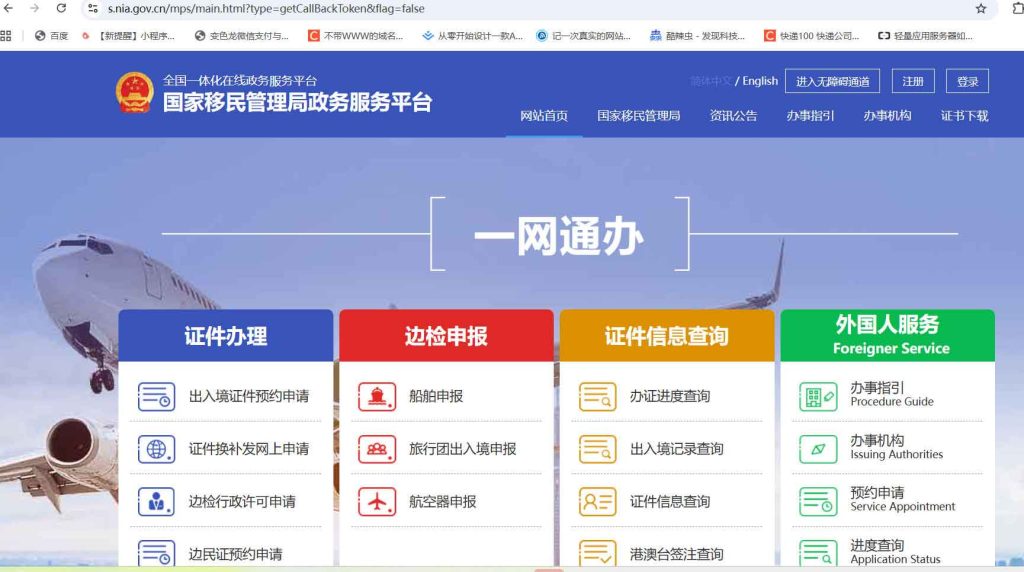
China National Immigration Bureau
11. What should foreign tourists pay attention to before entering China?
1. Visa-free is not the same as guaranteed entry
Even if the visa-free policy is complied with, whether entry is allowed to enter the country is still reviewed by the Chinese border inspection agency according to law.
Travelers should be able to reasonably explain their travel purposes and prepare relevant itinerary information.
It is recommended to save it with you:
- Round-trip or follow-up air tickets
- Hotel reservation
- Travel Plans in China
- Travel Insurance Information
- Contact information of travel agency or receptionist
It is not necessarily asked to provide every time, but preparation in advance can make the entry process smoother.
2. Pay attention to the visa-free stay time
Visa-free is allowed to stay for 30 days, which does not mean that you can stay indefinitely.
If the entry date is a certain day, you should calculate your latest departure date in accordance with relevant regulations.
Do not overdue due to misunderstanding of the ticket date or hotel order.
3. Tourism cannot replace long-term activities such as work and study
China’s visa-free policy is mainly aimed at short-term tourism, business, visiting relatives and friends, and exchange visits.
If planned in China:
- Jobs
- Long study
- news interview
- business show
- Engage in other activities that require approval
It is usually necessary to apply for the corresponding category of visa in advance or obtain relevant approval.
The 240-hour transit visa-free policy is also clear, and activities such as work, study, and news reporting cannot be carried out only with transit visa-free.
12. If you plan to go to Xinjiang, Northwest and some special areas, you need to confirm in advance
if you plan to go Xinjiang, Qinghai and Northwest China When traveling, you need to pay attention: some areas close to the border are border management areas, and foreign tourists may need to apply for relevant in advance when they go there. Border Defense Documents or Procedures, the specific requirements will vary according to the destination and the management regulations at that time.
In addition, some scenic spots, nature reserves, border areas or special management areas in China may exist Foreign tourists are not accepted for the time being or need to apply for confirmation in advance situation. Such restrictions do not necessarily only exist in Xinjiang, but may also encounter similar situations in some scenic spots in popular tourist cities such as Qinghai, other areas in the northwest, and even Luoyang.
So if your itinerary contains:
- Xinjiang border areas and some border scenic spots
- Areas near the borders such as Kanas and Baihaba
- Border areas such as Tashkurgan and Khujrafu
- The entire territory of Haixizhou, Qinghai and some special areas in Qilian County
- Some borders or special management areas in the Northwest region
- Some scenic spots in Luoyang and other cities that do not accept foreign tourists for the time being
It is recommended that before booking a ticket and determining the itinerary, Confirm in advance whether the destination can receive foreign tourists, and whether it is necessary to go through the border defense certificate or other related procedures.
Not sure if you can go? Consult us first
If you are a foreign tourist, prepare to go there Xinjiang, Qinghai, Luoyang and other northwest China and surrounding areas, but if you are not sure whether a scenic spot receives foreign tourists, or whether you need to go through the relevant procedures in advance, you can contact us before determining the itinerary.
we can according to your Nationality, travel date and specific destination, help you to confirm the relevant situation in advance, and adjust the travel route according to the actual situation, and try to avoid the situation that you can’t enter when you get there.
13. Simplified Step-by-Step Eligibility Check for First-Time Visitors
Follow this six-step process to assess your entry requirements:
- Confirm your passport-issuing country
- Verify your primary travel purpose (tourism, sightseeing, family visits or other permitted short-term activities may qualify for visa-free entry)
- Check your planned length of stay (standard unilateral visa-free access permits a maximum of 30 days)
- Review your travel route: If traveling Country A → China → Country B, cross-check eligibility for the 240-hour transit visa waiver
- Flag special regional travel such as Hainan or Xinjiang border zones for additional policy review
- Submit an application for an L Tourist Visa if all visa-free options are unavailable
Avoid delaying visa research until after you have booked international flights.
14. Before traveling in China, it is recommended to collect these official channels
China Consular Service Network
Here you can check the Chinese visa, visa-free policy, mutual visa exemption agreement and the latest consular announcement.
China Consular Service Network
China State Immigration Administration
You can check the entry, transit visa-free and related entry and exit policies of foreigners.
State Immigration Administration Government Affairs Service Platform
China Visa Online Application System
If you need to apply for an L-shaped tourist visa, you can learn about the online application process here.
China Visa Online Application System
12367 Immigration Management Service Hotline
If your nationality, travel route or entry method is special, you can directly consult the State Immigration Administration.
15. Complete the Foreign National Arrival Card Before Entering China
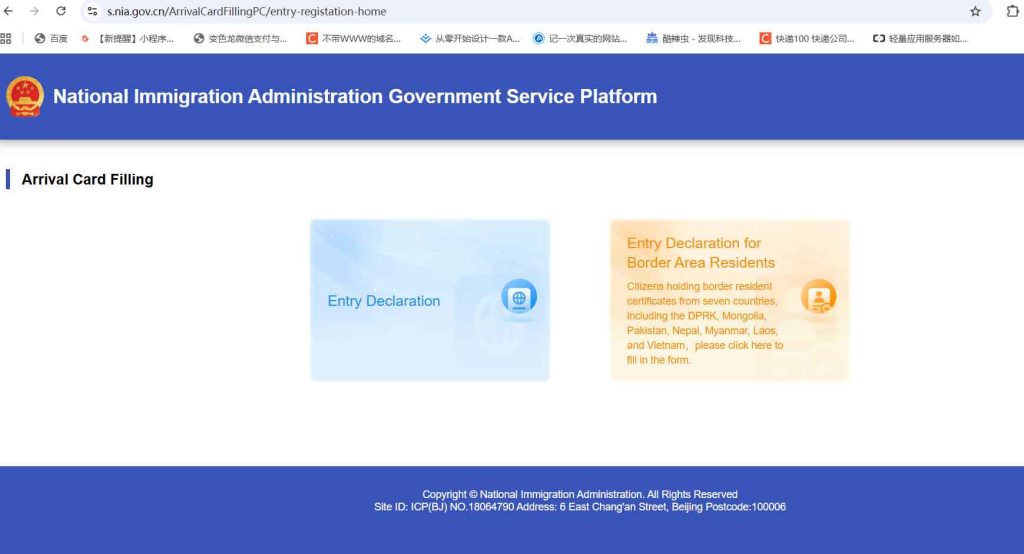
Beyond visa or visa-free documentation, all foreign visitors must complete border entry formalities upon arrival in China via the Foreign National Arrival Card.
Effective November 20, 2025, online pre-submission of the arrival card is mandated nationwide for foreign visitors.
Recommended Practice
Complete your arrival card submission online prior to departure to speed up border inspection processing upon landing in China.
Official Online Submission Portal: China Foreign Arrival Card Platform
Alternative submission channels: National Immigration Administration official website, NIA 12367 mobile application, WeChat Mini Program and Alipay Mini Program.
If you fail to submit the form in advance, you may complete it on-site upon arrival via:
- QR code scanning at the port of entry for digital submission
- Self-service terminal input
- Paper arrival card filled out manually with staff guidance
Groups Exempt From Completing the Foreign National Arrival Card
Seven categories of travelers are not required to submit the arrival card:
- Holders of Foreign Permanent Resident ID Cards
- Non-Chinese citizens holding Mainland Travel Permits for Hong Kong and Macao Residents
- Visitors traveling on group visas or eligible group visa-free tour packages
- Passengers transiting directly within 24 hours without leaving the restricted port zone
- Cruise passengers arriving and departing aboard the same vessel
- Travelers using expedited fast-track entry channels
- Foreign aircrew and transport vessel staff
Critical Distinction: Arrival Card vs. Customs Declaration Form
Do not confuse the two separate documents:
- Foreign National Arrival Card: For border immigration inspection
- Customs Declaration Form: For customs clearance procedures
Ordinary tourists carrying standard personal travel luggage generally do not need to submit a customs declaration. If you carry cash exceeding the regulated limit, high-value goods or other restricted items requiring disclosure, complete a customs declaration via the red inspection channel in compliance with China Customs regulations.
Practical Tip
Prepare your passport, flight details, accommodation address and local contact number before filling out the arrival card to streamline border inspection.
16.Summary: Check Visa-Free Eligibility First, Then Finalize Your Itinerary
China’s entry policies have become far more convenient for foreign travelers in recent years. Visitors from numerous countries may travel to China without applying for a traditional tourist visa by leveraging available visa-free schemes.
Assess your entry requirements in this priority order:
Unilateral Visa Waiver → Mutual Visa Exemption → 240-Hour Transit Visa Waiver → Regional Special Visa-Free Policies (e.g. Hainan) → L Tourist Visa
Visa-free access does not grant unrestricted entry to every region across China. Your eligibility depends on your nationality, passport type, entry method, travel purpose, permitted stay duration and full travel itinerary.
If your trip covers Xinjiang, Qinghai, Northwest China or other specially administered border zones, confirm in advance whether individual scenic spots accept foreign tourists and whether border entry permits or supplementary paperwork are required.
Always cross-reference the latest policy updates via the Chinese Consular Service Network, National Immigration Administration and local Chinese embassies/consulates before booking flights and confirming travel plans.
Unsure If You Require a China Visa?
If you plan a trip to China and cannot confirm whether your passport qualifies for visa-free entry or which visa-free scheme matches your travel route, reach out to us for assistance.
Share the following details with our team:
- Your nationality
- Planned travel dates
- Port of entry into China
- Cities and regions you intend to visit
- Number of travelers in your group
We will conduct an initial assessment of your visa or visa-free requirements and flag restricted destinations or mandatory pre-travel formalities for your itinerary.
Once your China travel plans are confirmed, we can design fully customized private China tours covering core destinations including Beijing, Xi’an, Luoyang, Shanxi, Xinjiang, Qinghai, Zhangjiajie and Chengdu, with bespoke routes tailored to your travel duration, interests and group size.
Planning a Trip to China?
Share your destination preferences, travel timeline and group size with us. We will outline all practical entry requirements and design a feasible China travel itinerary aligned with your plans.
👉 Contact us for a free China travel consultation.
Elephant-trip|Focus on China’s Private Custom Travel
2-6 independent chartered cars|Pure play without shopping|One-to-one itinerary planning

Scan the code to add WeChat