The Swan Song of Chinese Suspended Sculpture Art, a Ming Dynasty Spectacle More Shocking Than “Black Myth”
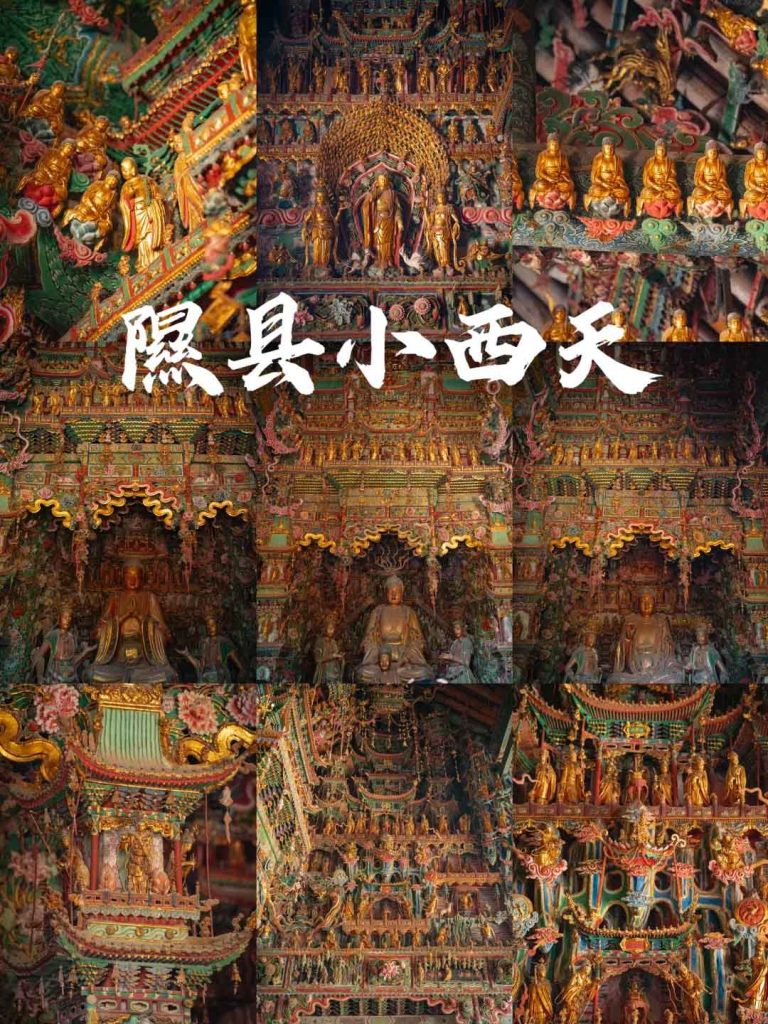
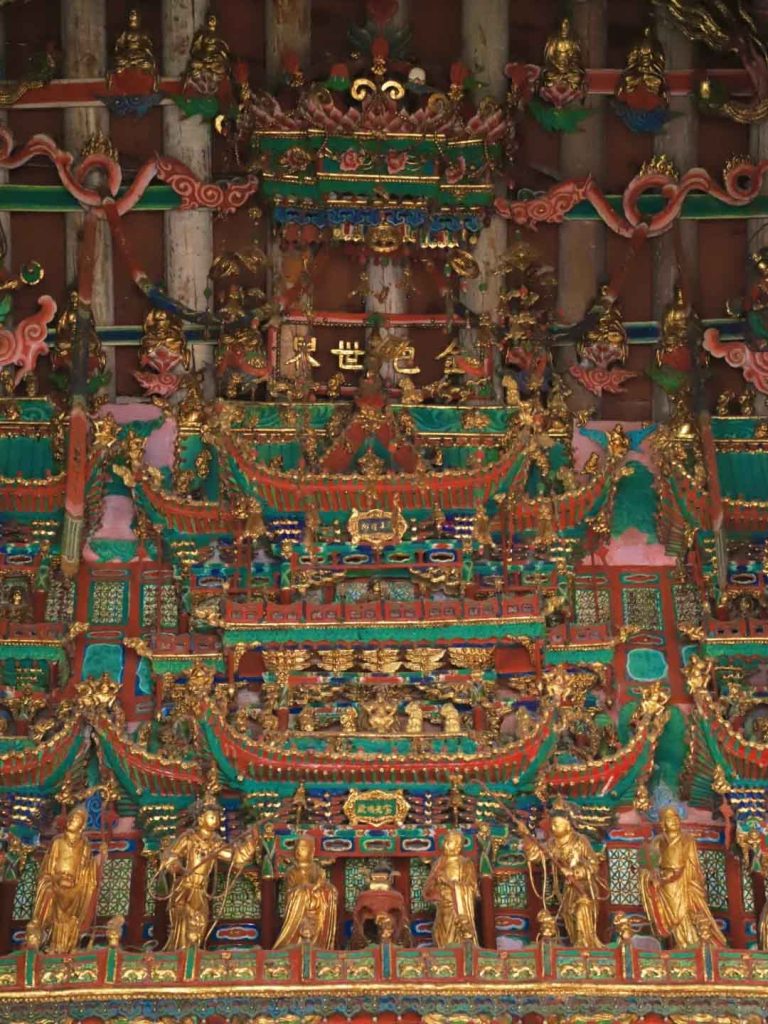
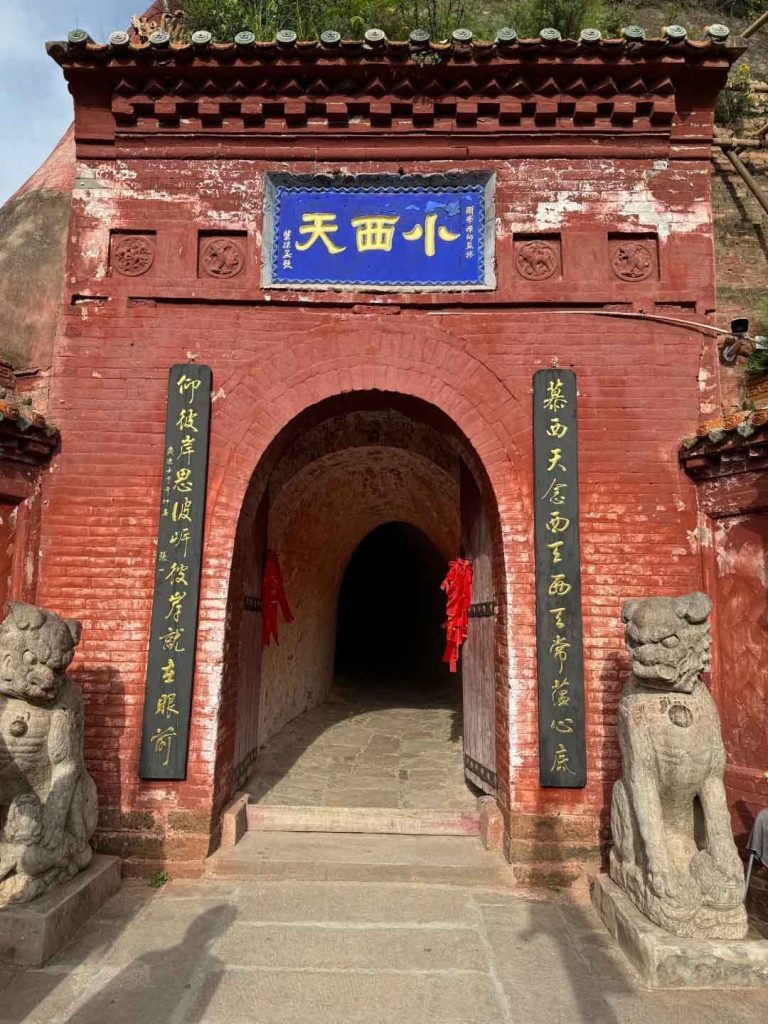
On the summit of Phoenix Mountain, northwest of Xi County in Linfen City, Shanxi Province, a Mahavira Hall of only 170 square meters houses nearly 2,000 gilded and colored sculptures. Layered and arranged with exquisite order, they extend from the floor to the ceiling, transforming even the roof beams and column tops into a sacred Buddhist realm. This is the “Swan Song of Suspended Sculpture Art in Chinese Sculpture History,” known as Xiao Xitian (also called Qianfo Nunnery). In 2024, with the explosive popularity of the domestic AAA game “Black Myth: Wukong,” the game’s awe-inspiring scenes of “gods and Buddhas filling the sky” were confirmed to be inspired by this place. This Ming Dynasty ancient temple, silent for 400 years, has finally been “seen” by the world again.
I. Basic Information
- Official Name: Qianfo Nunnery (commonly known as “Xiao Xitian”)
- Location: 1 kilometer northwest of Xi County town, Linfen City, Shanxi Province, on the summit of Phoenix Mountain
- Year of Establishment: Chongzhen 2nd year of Ming Dynasty (1629), initiated by Zen Master Dongming, a monk from Huochang Temple on Mount Wutai
- Completion of Core Structure: The suspended sculptures in the Mahavira Hall were completed in the 13th year of Shunzhi’s reign of the Qing Dynasty (1656), taking over 20 years.
- Architectural Layout: Facing east and built against the mountain, it is divided into three courtyards: front, middle, and upper, connected by stone steps and hidden passages, creating a sense of “doubt there is no path, yet another heaven.”
- Scenic Area Scale: Small and exquisite, with the main hall being only 169.6 square meters, but with extremely high artistic density.
II. Historical Origins: A Pure Land of Faith Amidst Turmoil
Xiao Xitian was founded at the end of the Ming Dynasty and the beginning of the Qing Dynasty, a period of social unrest and frequent warfare. Zen Master Dongming, to escape the troubled times, led his disciples to Phoenix Mountain and vowed to build a “paradise on earth.” Using wood as bones, mud as flesh, and gold as clothing, he transformed the entire Mahavira Hall into a three-dimensional Buddhist kingdom, representing both a steadfast adherence to faith and a spiritual transcendence from the chaotic world. After nearly 400 years of wind and rain, the colored sculptures remain brilliant and magnificent, a true miracle. Some Buddha statues are gilded, reportedly using about 7-14 catties of gold. After hundreds (the guide said 400?) of years, they are still resplendent. The colored sculptures are in various poses, with the largest over 3 meters tall and the smallest only the size of a thumbnail, vividly depicting the vast world of Buddhism. Xiao Xitian is like an art treasure trove forgotten by time, where every detail tells of the wisdom and craftsmanship of the ancients.
III. Artistic Treasure: 1978 Suspended Sculptures, Constructing a Ming Dynasty Buddhist Universe
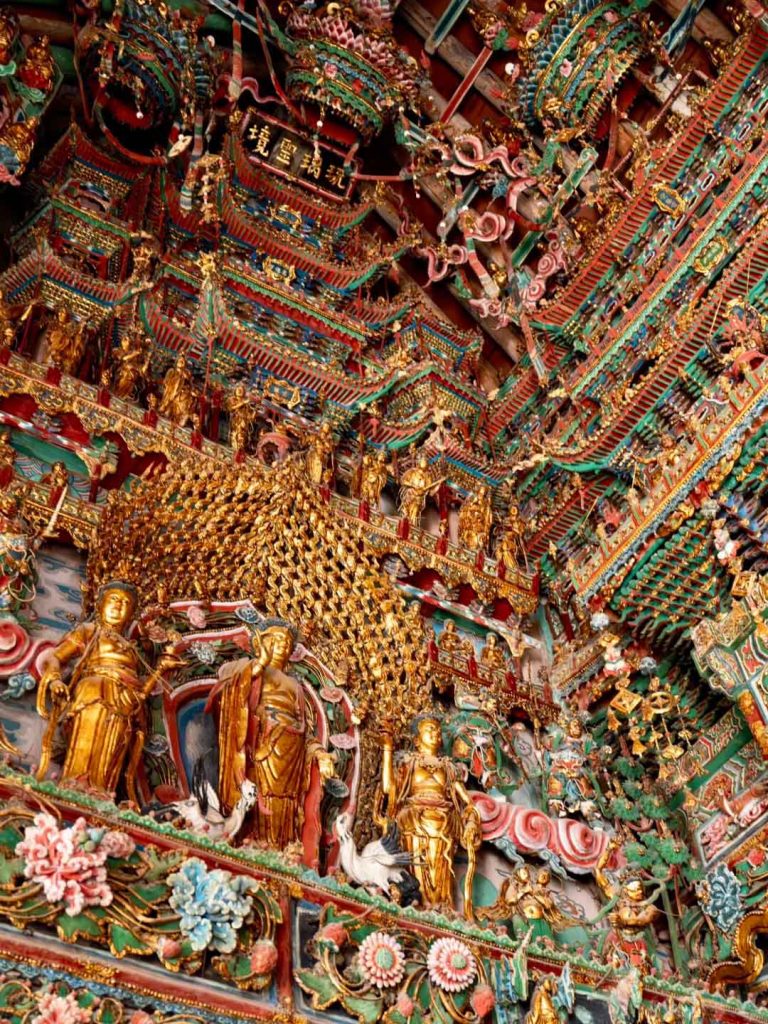
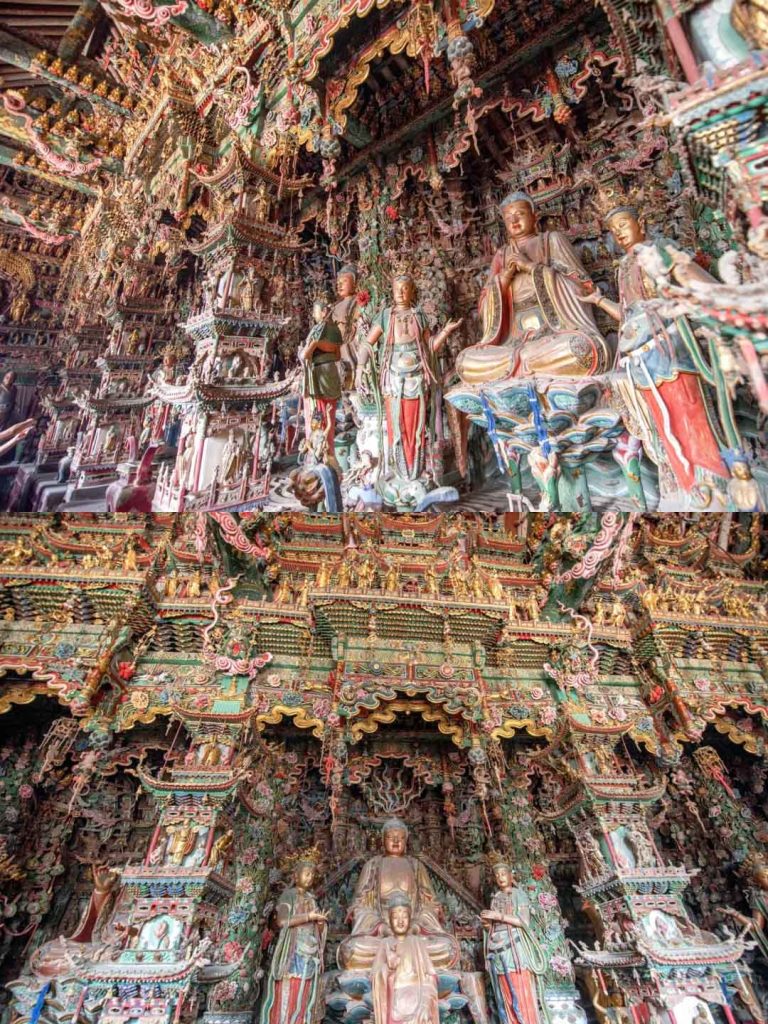
The core charm of Xiao Xitian lies in the suspended sculpture ensemble within the Mahavira Hall—this is the largest, best-preserved, and most exquisitely crafted Ming Dynasty suspended sculpture remnant in China.
✅ Five Major Highlights, Each Step a Blooming Lotus
- Sacred Realm of Suspended Sculpture
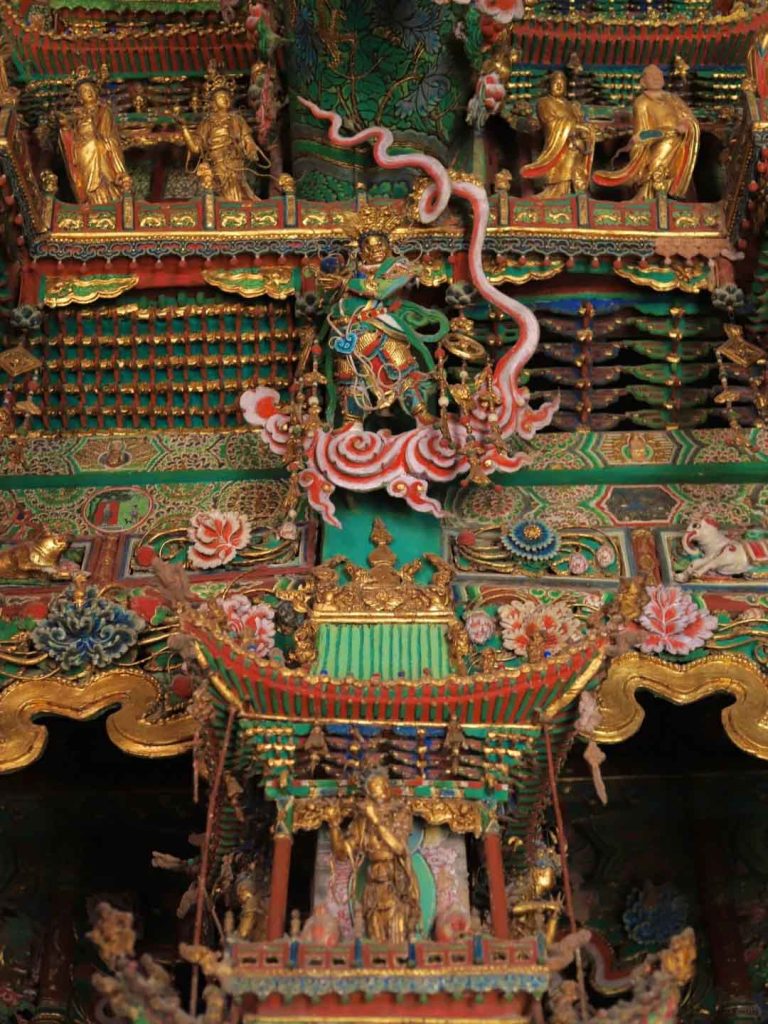
- The entire hall features 1978 colored sculptures, with the largest main Buddha measuring 3 meters tall and the smallest only the size of a fingernail;
- They adorn the walls, beams, purlins, and roof rafters, leaving no empty space, creating a three-dimensional Buddhist realm of “heavenly palaces and flying apsaras.”
- Five Pure Lands
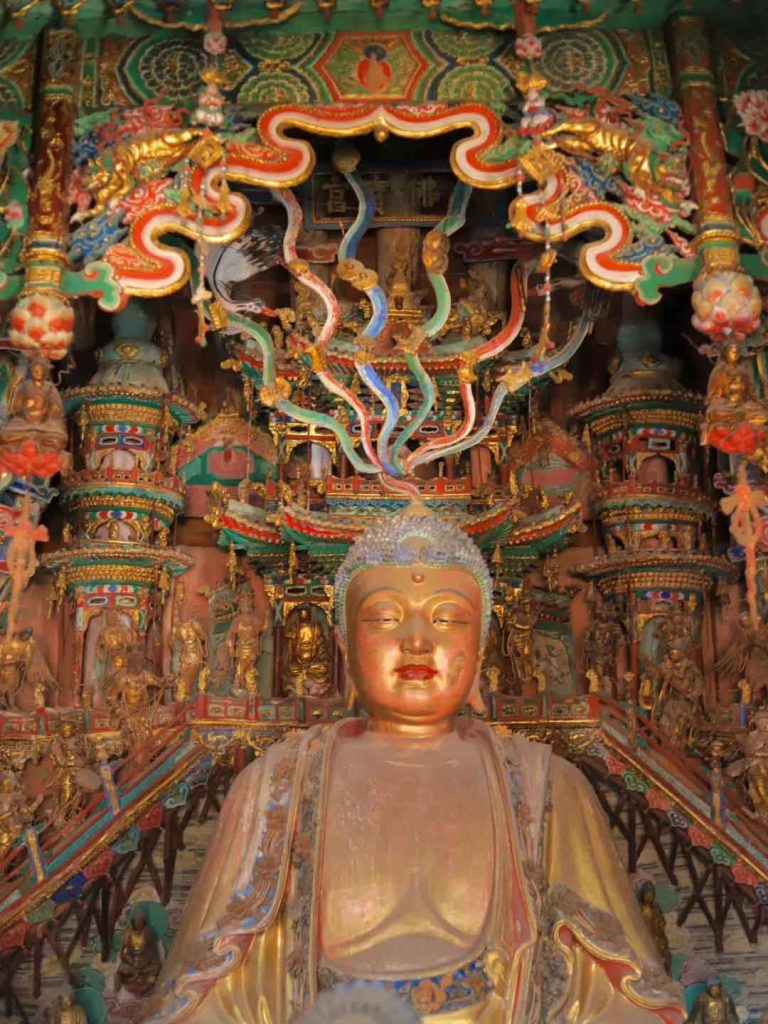
- The west wall features five large niches, enshrining Medicine Buddha, Amitabha Buddha, Shakyamuni Buddha, Vairocana Buddha, and Maitreya Buddha;
- Each main Buddha is 3 meters tall, with two attendant bodhisattvas (2.1 meters tall) standing before them, collectively known as the “Five Buddhas of the Five Directions.”
- Buddhist Realm Above the Niches
- Above the niches, five layers of inverted pagoda-style dougong brackets support the structure, with hanging flowers and tassels resembling rising clouds and mist;
- They depict the Eastern Pure Lapis Lazuli World, the Western Pure Land, the Sahā World, and other five great pure lands.
- Precious Pond Beneath the Buddha
- Beneath the lotus pedestal of the main Buddha is a “Seven Treasures Pond,” with dynamic water patterns and leisurely cranes, symbolizing the eight virtues of water and signifying purity and solemnity.
- Pagoda Golden Pillars
- Four golden pillars divide the five niches. The front pillars are four-sided pagodas, each level carved with small bodhisattvas and ritual implements;
- The rear pillars are entwined with floral patterns, resembling brocade, with bases shaped like large celadon vases, showcasing peak craftsmanship.
💡 Secret of the Materials: The colored sculptures are made with local red clay mixed with glutinous rice paste as the base, with straw bundles for the framework, and gilded with gold leaf on the surface—reportedly using a total of 7–14 catties of gold, which is why they remain so radiant after 400 years.
IV. Why Did “Black Myth: Wukong” Draw Inspiration from Here?
The classic scene in the game “Black Myth: Wukong,” “Having seen the future, why not bow?,” has its visual prototype in the suspended sculpture ensemble of Xiao Xitian’s Mahavira Hall. The development team conducted on-site research, digitizing and restoring elements such as the dense Buddha statues, coiled golden dragons on pillars, and heavenly palaces, astonishing global players with the ultimate aesthetics of “Chinese fantasy.” CCTV also referred to it as a “real Buddhist kingdom more shocking than the game.”
V. Practical Information
Tickets and Opening Hours
- Ticket Price: 35 yuan/person, Half-price ticket: 18 yuan/person
- Opening Hours:
- Summer (April–October): 7:30–17:30
- Winter (November–March): 8:00–17:00
- Recommended Visit Duration: 1–2 hours (allowing time to examine every detail)
Transportation Guide
- Driving: Navigate to “Xi County Xiao Xitian.” Approximately 4 hours from Taiyuan, 1.5 hours from Linfen;
- Public Transportation: Take a train or bus to Xi County, then take a taxi or walk 1 kilometer up the mountain (the slope is quite steep, so a taxi is recommended);
- Parking: There is a small parking lot at the foot of the mountain. The walk up involves about 10 minutes of stone steps.
- From Taiyuan: Carpooling (approx. 3.5 hours, 100 yuan/person) or bus (Taiyuan West Bus Station → Xi County, 80 yuan/person, 3 buses daily);
- From Linfen: Take a “Little Yellow Car” (35 yuan/person, arriving at Xi County town in about 2 hours);
☀️ Best Time to Visit
- Before 9:00 AM: Fewer people, soft light, sunlight slanting into the hall, filling it with golden light, excellent for photography;
- Avoid holiday peak times, otherwise, you may need to queue and proceed slowly.
VI. Travel Tips
- Sun Protection and Heatstroke Prevention: The scenic area is exposed, with intense sun in summer. Be sure to wear a hat, apply sunscreen, and bring water;
- Wear Comfortable Shoes: The path up the mountain consists of stone steps, and you need to walk slowly while looking up inside the hall. Non-slip shoes are essential;
- No Flash Photography: To protect the pigments of the colored sculptures, flash photography is strictly prohibited inside the hall;
- Patient Queuing: Due to the narrow space and large crowds, there is often a queue with a detour. Please maintain order;
- Respect Religious Sites: Do not be noisy, do not touch the statues, and maintain a solemn demeanor.
Xiao Xitian is not an ordinary temple, but a Ming Dynasty cosmic model built with earth, gold leaf, and faith.
Here, you see not just Buddha statues, but the ancients’ entire imagination of the “Pure Land”—
One hall houses a thousand Buddhas, every inch a pure land; four hundred years of time, condensed into a moment of golden light.
If you were once awestruck by the gods and Buddhas in “Black Myth,” then you must visit Xiao Xitian in person—
Because true miracles are always at the scene.